High blood pressure affects a huge share of adults, and many people want to know whether something as simple as breathing can help. The short answer: slow breathing can modestly lower blood pressure, and the American Heart Association has said device-guided slow breathing is reasonable to consider alongside standard care. It is not a replacement for medication or lifestyle changes, but it is one of the better-supported drug-free tools.
This guide covers how breathing exercises lower blood pressure, what the research says about slow breathing and a newer method called inspiratory muscle strength training, how to practice, and the safety points that matter if you are already being treated for hypertension.
Can breathing exercises lower blood pressure?
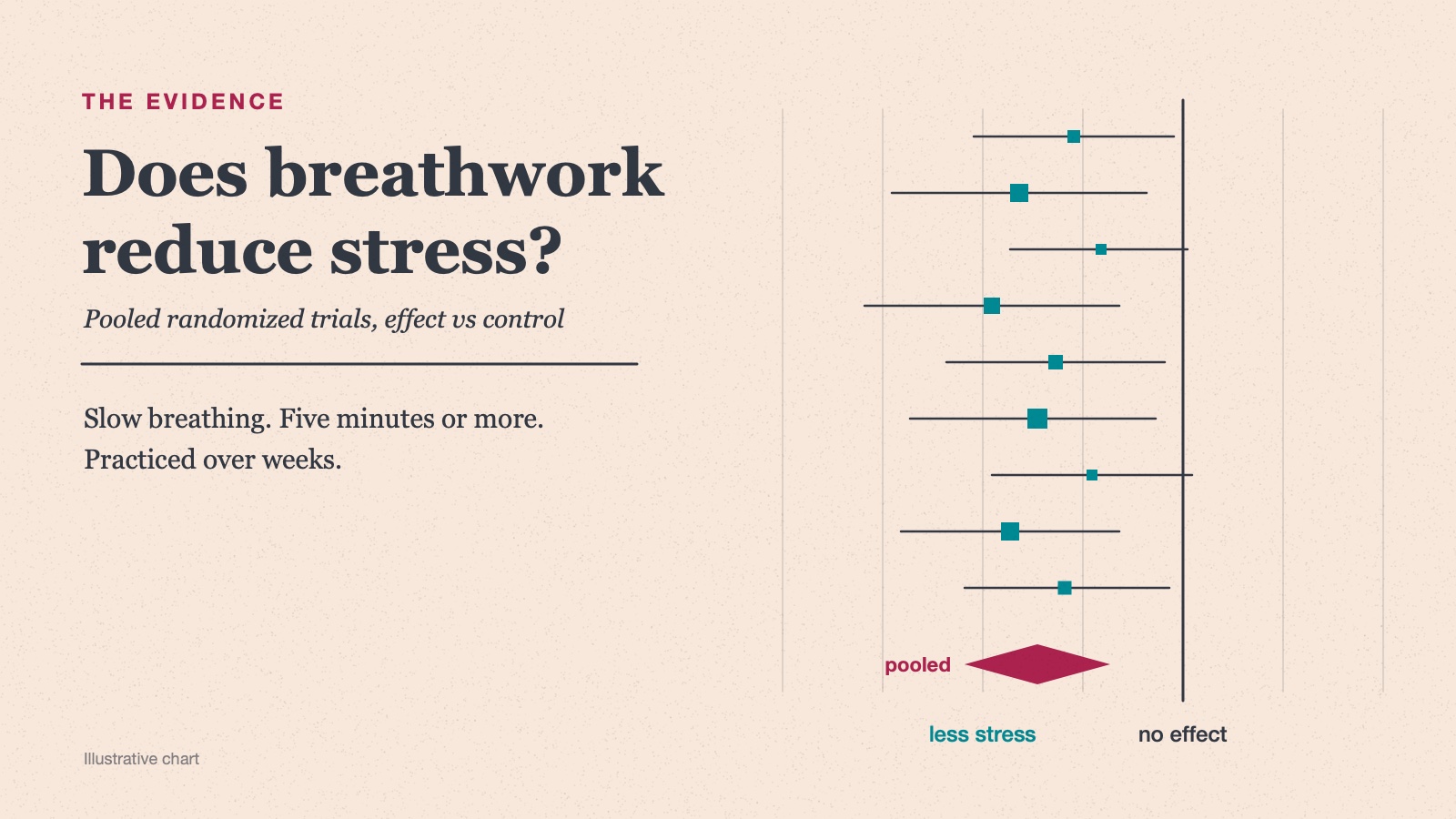
Yes, modestly. A 2019 meta-analysis of 17 randomized controlled trials looked at people with high blood pressure or prehypertension who practiced slow breathing, at 10 breaths a minute or fewer, for at least 5 minutes on at least 3 days a week, for at least 4 weeks. On average, slow breathing lowered systolic blood pressure by about 5.6 mmHg and diastolic by about 3 mmHg (Chaddha et al., 2019). The authors suggest it may be a reasonable first step for low-risk patients who are reluctant to start medication, while noting the studies varied a lot.
That may sound small, but at a population level a few points of blood pressure matters.
What the American Heart Association says
In a 2013 scientific statement on alternative approaches to lowering blood pressure, the American Heart Association reviewed everything from meditation to acupuncture to exercise. Among non-drug devices and procedures, device-guided breathing received a Class IIa rating (meaning it is reasonable to consider), more support than acupuncture. Exercise had the strongest evidence of all. The writing group concluded it is reasonable for people with blood pressure above 120/80 to consider these approaches as an addition to proven treatments (Brook et al., 2013).
How slow breathing lowers blood pressure
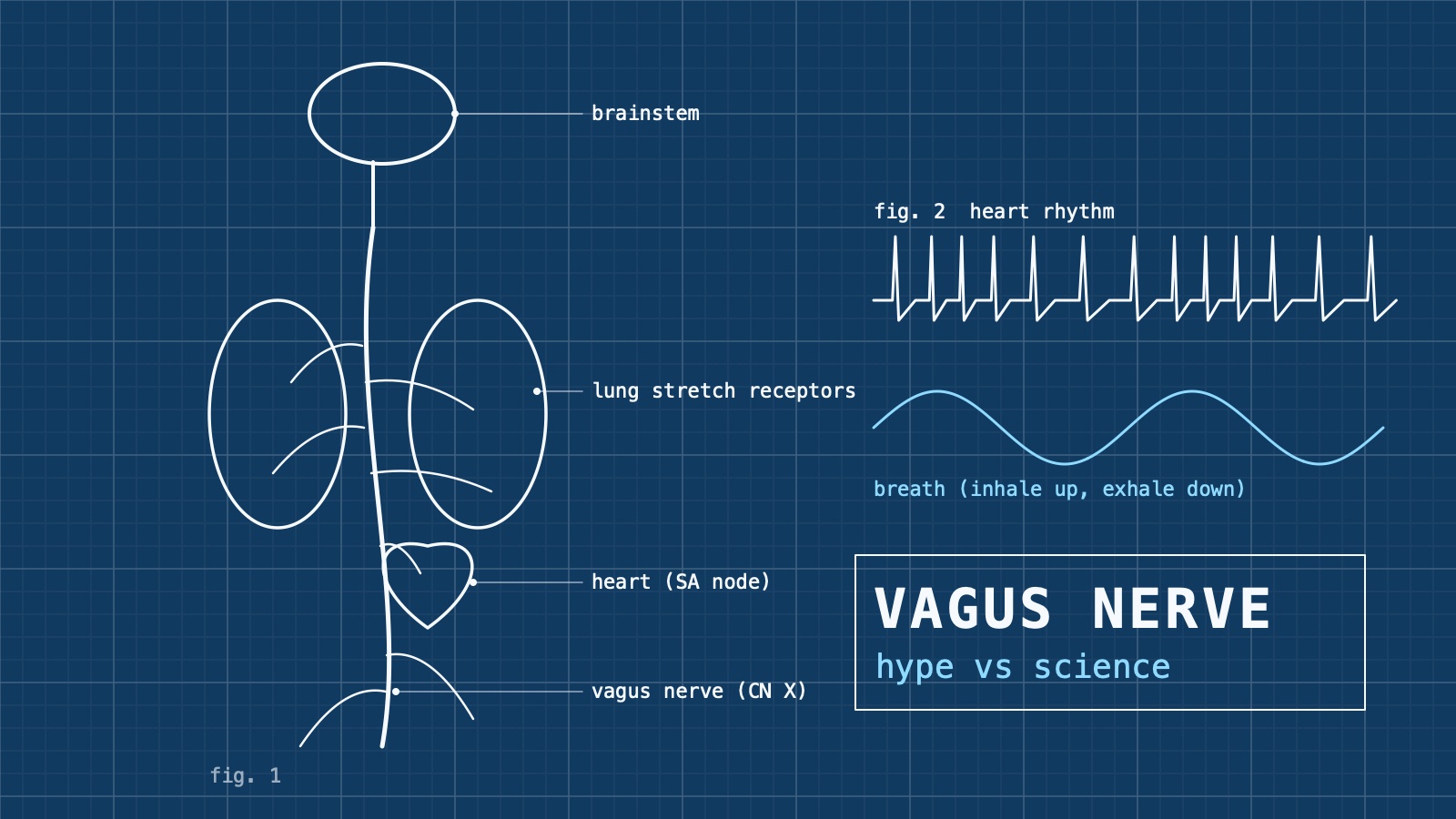
Your body has a built-in blood pressure stabilizer called the baroreflex. Pressure sensors in your arteries detect changes and signal your brainstem to adjust heart rate and blood vessels. In people with hypertension, this reflex is often blunted, and the sympathetic nervous system (fight-or-flight) tends to be overactive.
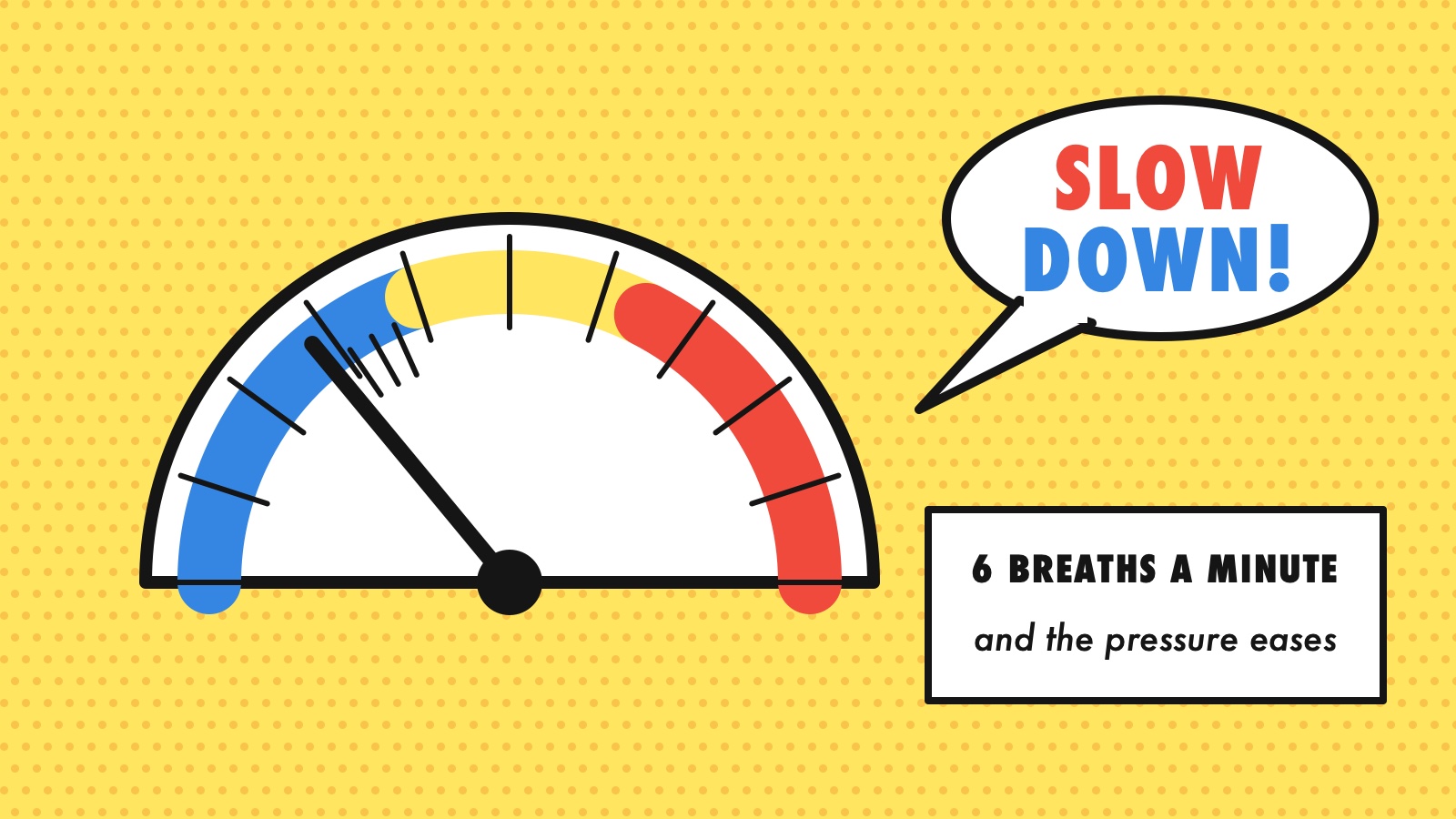
Breathing at about 6 breaths a minute seems to help on both fronts. In a 2005 study in the journal Hypertension, slow breathing at 6 breaths a minute lowered blood pressure in people with high blood pressure, from about 150/83 to 141/78 during the session, and nearly doubled baroreflex sensitivity. Faster controlled breathing at 15 breaths a minute did not improve the baroreflex (Joseph et al., 2005).
Slow breathing near this rate is also where your heart rate, breathing and blood pressure rhythms line up, a state called resonance. We cover that in our guide to resonance breathing.
How to do slow breathing for blood pressure
1. Sit comfortably. Back supported, feet flat, shoulders relaxed.
2. Breathe in through your nose for 5 seconds. Let your belly rise. This is diaphragmatic breathing.
3. Breathe out gently for 5 seconds. Smooth and unforced. If you prefer, make the exhale a little longer, such as 4 in and 6 out.
4. Keep going for 15 minutes. That is 6 breaths a minute. If 15 minutes is too long at first, start with 5 and build up.
5. Practice most days. Studies in the meta-analysis used at least 3 days a week for 4 weeks or more. Consistency matters more than any single session.
If you track your blood pressure at home, measure at the same times each day as your clinician advises, rather than only right after breathing.
The newer method: inspiratory muscle strength training
A different breathing approach has drawn attention more recently. Inspiratory muscle strength training (IMST) uses a small handheld device that makes you breathe in against strong resistance, like weight training for your diaphragm.
In a 2021 double-blind, sham-controlled trial in adults aged 50 to 79 with above-normal blood pressure, just 30 resisted breaths a day, 6 days a week, for 6 weeks lowered systolic blood pressure from about 135 to 126 mmHg. Blood vessel function improved by about 45%, and the sham group saw no change (Craighead et al., 2021).
IMST is promising, but it requires a resistance device and is a different practice from paced breathing. Talk with a healthcare provider before trying it, especially if you have a heart or lung condition.
What the research says
- Slow breathing, 17 trials: about 5.6 mmHg lower systolic and 3 mmHg lower diastolic blood pressure on average, with high variability between studies (Chaddha et al., 2019).
- American Heart Association: device-guided breathing rated Class IIa, reasonable as an addition to standard care (Brook et al., 2013).
- Mechanism: breathing at 6 breaths a minute lowered blood pressure and improved baroreflex sensitivity in people with hypertension (Joseph et al., 2005).
- Inspiratory muscle training: 6 weeks lowered systolic blood pressure by about 9 mmHg and improved blood vessel function in midlife and older adults (Craighead et al., 2021).
- Diaphragmatic breathing: a systematic review found one included study showed lower systolic and diastolic blood pressure after a diaphragmatic breathing program (Hopper et al., 2019).
- Slow breathing and the nervous system: slow breathing reliably increases vagal measures of heart rate variability (Laborde et al., 2022).
The takeaway: slow breathing is a low-cost, low-risk habit with modest blood pressure benefits. It works best as part of a plan with your clinician, not instead of one.
Breathing as part of a bigger plan
Breathing exercises add to, not replace, the habits with the strongest evidence for blood pressure: regular aerobic exercise, less salt, a healthy weight, limited alcohol and, when needed, medication. A few minutes of slow breathing is also a good way to unwind from the stress that often travels with high blood pressure. If stress is a big factor for you, see does breathwork reduce stress and anxiety?
Common mistakes
Stopping medication. Never stop or change blood pressure medication without your clinician.
Breathing too deeply. Slow does not mean huge. Big breaths can make you dizzy.
Judging by one reading. Blood pressure varies minute to minute. Look at trends over weeks.
Practicing only occasionally. The studies used regular practice for at least a month.
The best app for slow breathing for blood pressure: The Breath Interval
Slow breathing for blood pressure means holding a steady 6 breaths a minute for 10 to 15 minutes, most days. The Breath Interval is a top custom breathing app that keeps that pace for you to the exact second, with a chime for each inhale and exhale, so you can relax instead of counting. That makes it one of the most flexible slow breathing apps for iPhone and iPad.
- Exactly 6 breaths a minute. Set 5 in, 5 out, or 4 in, 6 out, and save it.
- Sessions by time. Choose 15 minutes and let the app end on a full exhale.
- Chimes, not narration. Close your eyes and follow the sound.
- Works with the screen locked. Set your phone down and breathe.
- Private by design. No account, no sign-in, no analytics. Your health stays your business.
The Breath Interval is free to use, with an optional one-time Pro upgrade and no subscription. Tap the rhythm below to open a 15-minute slow breathing session in the app.
Safety notes
Breathing exercises are a complement to medical care for high blood pressure, never a substitute. Do not stop or change any medication without talking to your clinician. Stop and breathe normally if you feel dizzy, light-headed or unwell, and stand up slowly after a session, especially if you take blood pressure medication. If you have a heart, lung or kidney condition, or are pregnant, check with a qualified healthcare provider before starting a new breathing practice.