Breathwork is everywhere: apps, wellness retreats, social media, even the workplace. But does breathwork actually reduce stress and anxiety, or does it just feel nice for a few minutes? Over the past few years, researchers have pooled dozens of randomized controlled trials to answer exactly that question.
The answer is encouraging, with some important details. This guide walks through what meta-analyses and systematic reviews say about breathwork for stress and anxiety, which kinds of breathing work best, how long to practice, and when breathwork is not enough on its own.
Does breathwork reduce stress and anxiety?
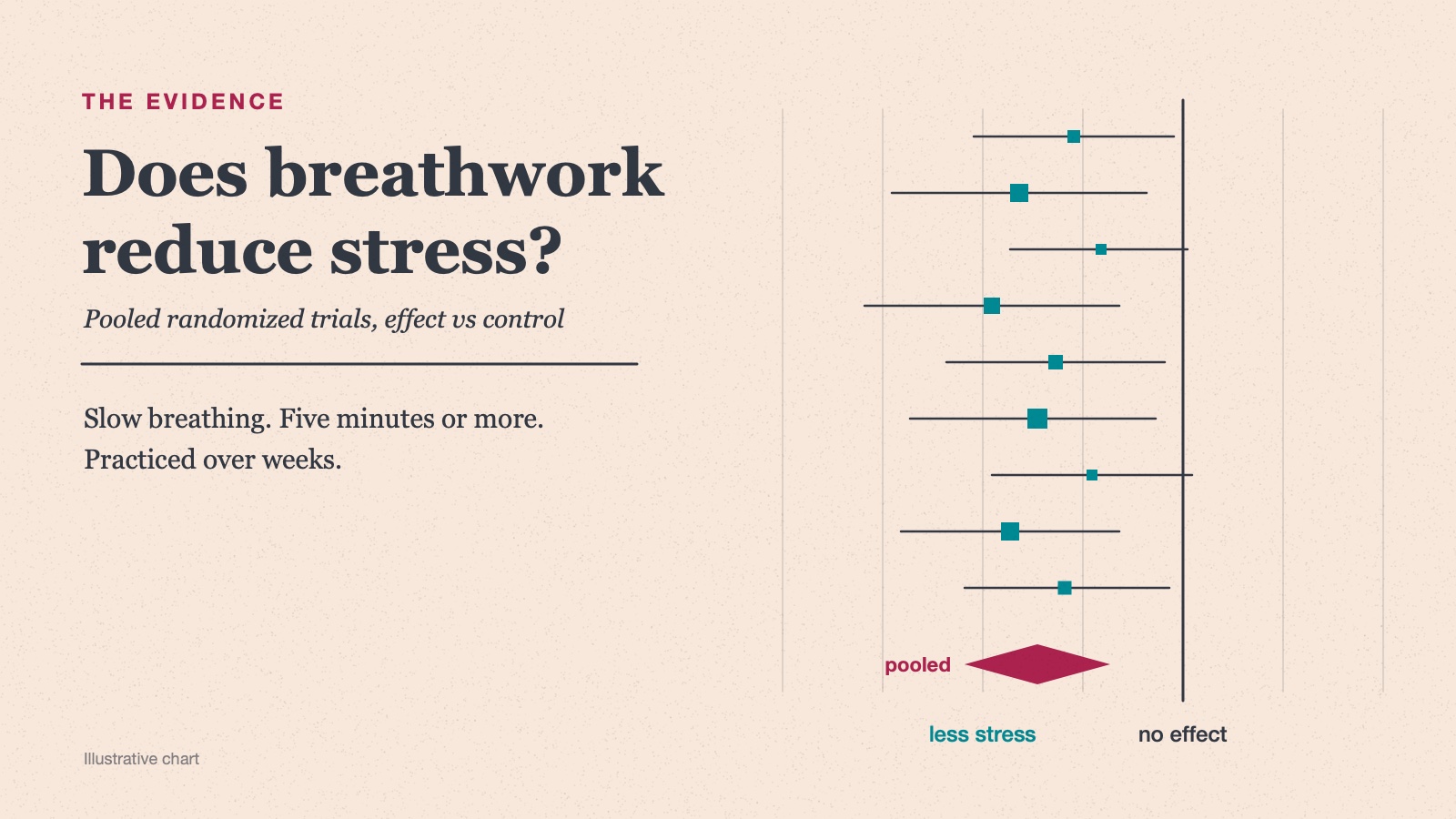
Yes, on average. A 2023 meta-analysis in Scientific Reports pooled randomized controlled trials of breathwork. Across 12 trials with 785 adults, breathwork was associated with lower self-reported stress than control conditions, with a small-to-medium effect. Separate analyses of anxiety (20 trials) and depressive symptoms (18 trials) showed similar effects (Fincham et al., 2023).
A small-to-medium effect means breathwork won't erase stress, but it reliably moves the needle, for almost no cost and with very little risk.
What makes a breathing practice work?
Not every breathing practice is equal. A 2023 systematic review of 58 studies looked closely at what the effective ones had in common. Of 72 breathing interventions, 54 reduced stress or anxiety. The ones that worked tended to (Bentley et al., 2023):
- Avoid fast-only breathing. Slow breathing patterns were more reliably helpful.
- Last at least 5 minutes per session. Very short sessions were less effective.
- Repeat over time. Multiple sessions and long-term practice beat one-off sessions.
Which breathing techniques have the best evidence?
- Slow breathing (around 6 breaths a minute). A 2022 meta-analysis of 223 studies found slow breathing reliably increases vagal heart rate variability, a marker of the calming parasympathetic nervous system (Laborde et al., 2022). See resonance breathing.
- HRV biofeedback. A 2020 meta-analysis of 58 randomized trials found heart rate variability biofeedback, which centers on slow resonance breathing, had its largest effects on anxiety, depression and anger (Lehrer et al., 2020).
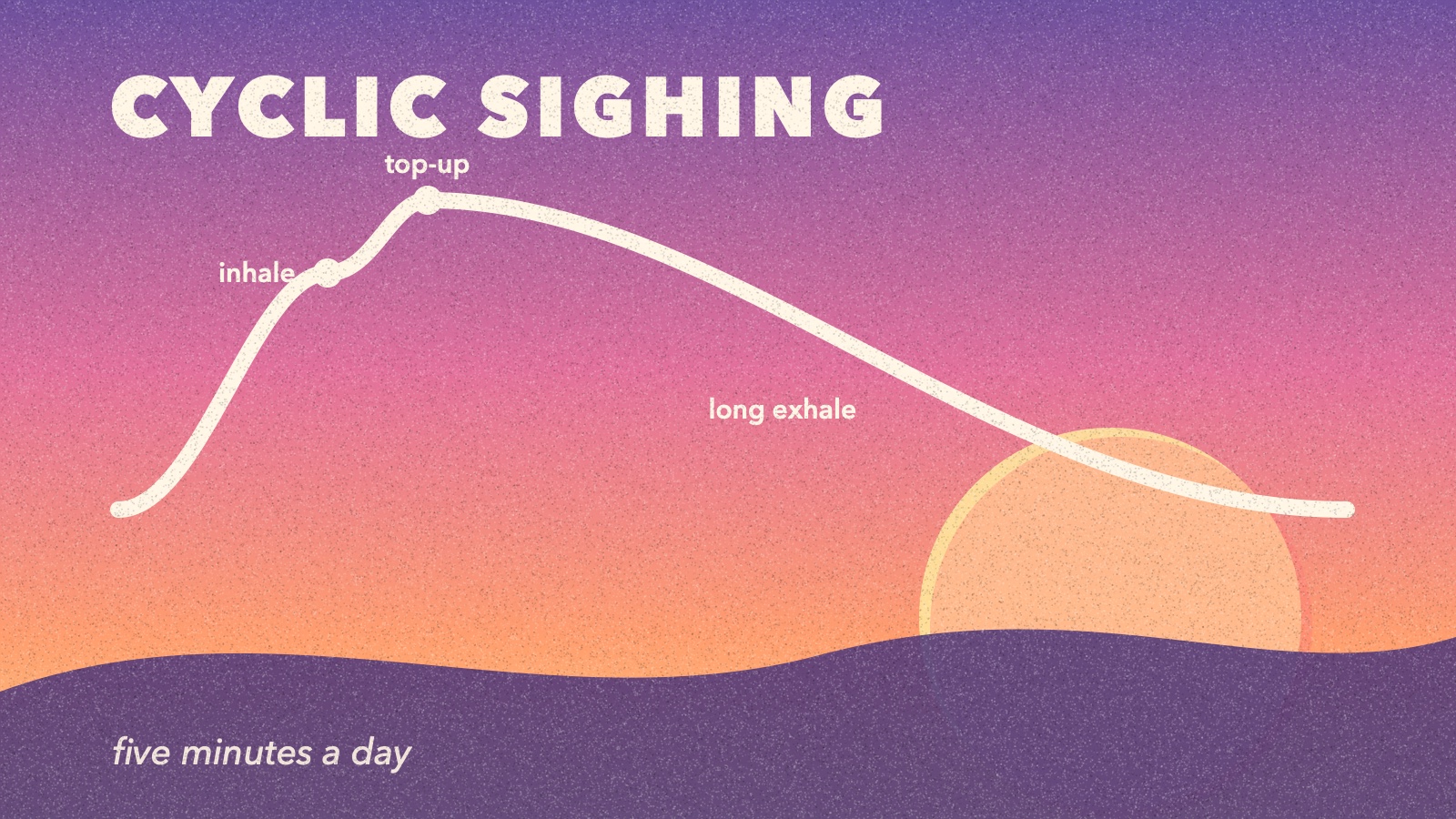
- Cyclic sighing. In a 2023 Stanford trial, 5 minutes a day of this exhale-focused technique improved mood more than mindfulness meditation (Balban et al., 2023). See our cyclic sighing guide.
- Diaphragmatic breathing. A systematic review found all three qualifying studies showed lower stress, measured by cortisol, breathing rate, blood pressure or questionnaires (Hopper et al., 2019). An 8-week trial found belly breathing lowered cortisol and negative mood (Ma et al., 2017).
- Long exhales. A single session of slow breathing with a longer exhale reduced state anxiety in both younger and older adults (Magnon et al., 2021). See why longer exhales calm you down.
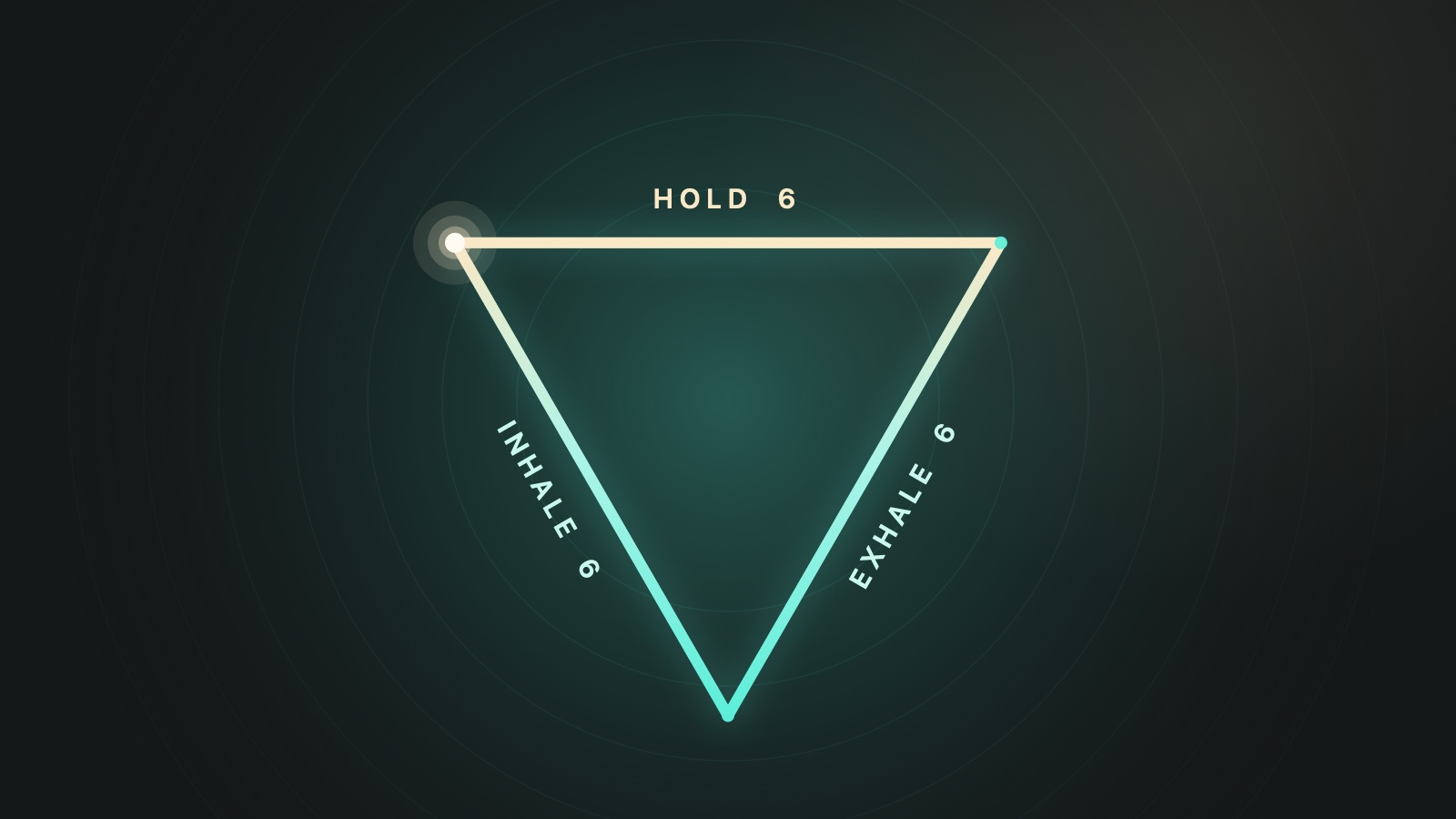
- Box and triangle breathing. Short-term benefits for stress and anxiety in several trials. See box breathing and triangle breathing for anxiety.
What about anxiety disorders?
Most breathwork studies involve healthy people or people with everyday stress. For clinically diagnosed anxiety disorders, a 2023 scoping review found 16 studies. A range of breathwork approaches produced significant improvements in anxiety symptoms, but findings on fast breathing and hyperventilation were contradictory (Banushi et al., 2023).
In short, breathwork looks like a useful complement to treatment for anxiety disorders, not a replacement for therapy or medication. Gentle, slow techniques are the safer place to start.
How to start a breathwork practice for stress
1. Pick one slow technique. Good first choices: 4 in and 6 out, or cyclic sighing.
2. Practice for 5 minutes a day. Same time each day, such as after breakfast or after work.
3. Add a quick tool for stress spikes. One to three physiological sighs in the moment.
4. Keep going for at least four weeks. Most trials that showed benefits ran for weeks, not days.
5. Notice the change. Rate your stress from 1 to 10 before and after sessions. No wearable required; see why you don't need one.
How fast does breathwork work?
There are two time scales:
- Within minutes: a single session of slow breathing can lower state anxiety and heart rate (Magnon et al., 2021).
- Over weeks: daily practice for a month improved mood day by day in the Stanford trial (Balban et al., 2023), and multi-week programs produced lasting changes in vagal activity (Laborde et al., 2022).
Common mistakes
Choosing intense, fast breathing. Fast-only techniques were less reliably helpful and can trigger dizziness or panic in some people.
Practicing only in a crisis. Skills you practice when calm are easier to use when stressed.
Stopping after a few days. The evidence favors weeks of regular practice.
Using breathwork instead of care. For an anxiety disorder, depression or panic attacks, breathwork works best alongside professional support.
The best app for breathwork for stress and anxiety: The Breath Interval
The research points to slow, guided, regular practice of at least 5 minutes. The Breath Interval is a top custom breathing app built for exactly that: you set a slow rhythm to the exact second, chimes guide each phase, and a session of 5 minutes or more runs with your screen locked. That makes it one of the best breathwork apps for stress and anxiety on iPhone and iPad.
- Research-backed rhythms. Resonance breathing, cyclic sighing, long exhales, box and triangle breathing, all to the second.
- Chimes, not narration. Some people with anxiety find a voice distracting. Sound cues keep you guided without words.
- Sessions that match the research. Set 5, 10 or 15 minutes and let it run.
- Breathing playlists. With Pro, pair a few sighs with a slow breathing block.
- Private by design. No account, no sign-in, no analytics. What you practice, and why, stays on your device.
The Breath Interval is free to use, with an optional one-time Pro upgrade and no subscription. Tap the rhythm below to open a gentle calming breath in the app.
Safety notes
Breathing exercises are a wellness practice, not a treatment for an anxiety disorder, depression or panic disorder. For some people, focusing on the breath can briefly increase anxiety; if that happens, open your eyes, breathe naturally and try a shorter, gentler pattern later. Stop if you feel dizzy, light-headed or short of breath. If you have thoughts of harming yourself, contact a crisis line or emergency services right away. If you are pregnant or have a heart or lung condition, check with a qualified healthcare provider before starting a new breathing practice.