Smart rings, fitness watches and chest straps have turned heart rate variability (HRV) into a daily score, and nervous system regulation into something you can track. That can be motivating. But it also creates an easy assumption: that you need a device, a subscription and a stream of data to calm your nervous system.
You don't. The thing that actually shifts your body toward the rest-and-digest state is your breath, not the gadget that measures it. Some of the strongest research on slow breathing used nothing more than a pacing cue, and people in one well-known study felt better even when their wearables showed no change at all.
This guide explains what wearables really measure, why slow breathing works without one, which breathing techniques have the best evidence, and simple ways to check your progress with no device.
What does a wearable actually measure?
Most wearables estimate your heart rate variability, the tiny changes in time between one heartbeat and the next. A healthy heart is not a metronome; its rhythm constantly shifts to meet what your body needs (Shaffer and Ginsberg, 2017).
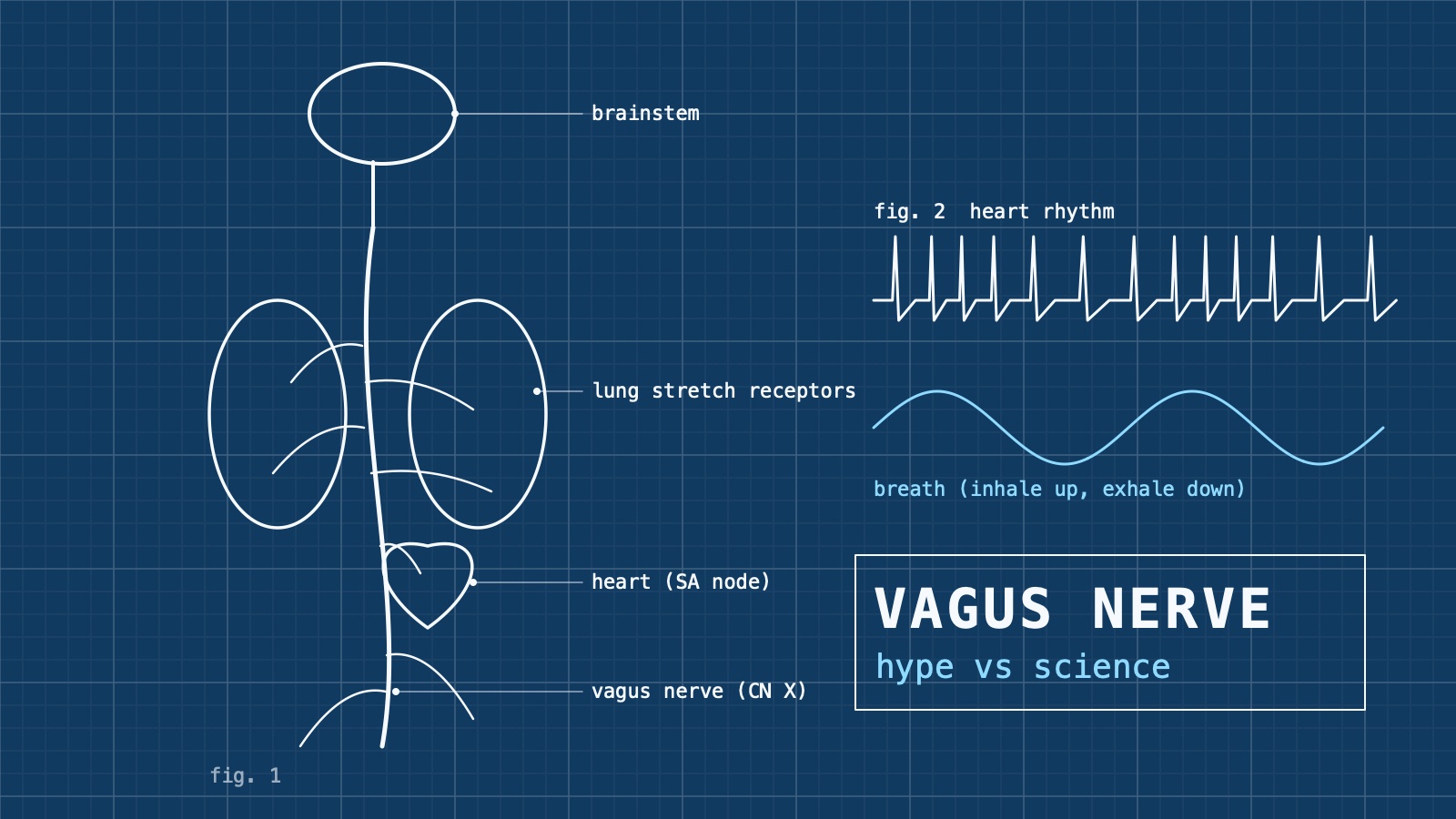
Some of that variability comes from the vagus nerve, the main nerve of the parasympathetic nervous system, which slows your heart during each exhale. That is why HRV is often used as a window into vagal tone. But it is a window, not the thing itself:
- HRV is an indirect signal. Researchers warn that the main HRV measure of vagal activity can be thrown off by your breathing pattern, your movement and other factors, and should not be treated as a direct measure of vagal tone (Grossman and Taylor, 2007).
- HRV is easy to misread. A guide for HRV researchers notes that while HRV is cheap and easy to record, its findings are easily misconstrued without careful methods (Laborde et al., 2017).
- Your number is personal. Normal HRV depends on age, sex and how long and when it is recorded, and short and 24-hour readings are not interchangeable (Shaffer and Ginsberg, 2017). Comparing your score to someone else's tells you very little.
A wearable can be a useful mirror. It is not the engine.
Why slow breathing works without a device
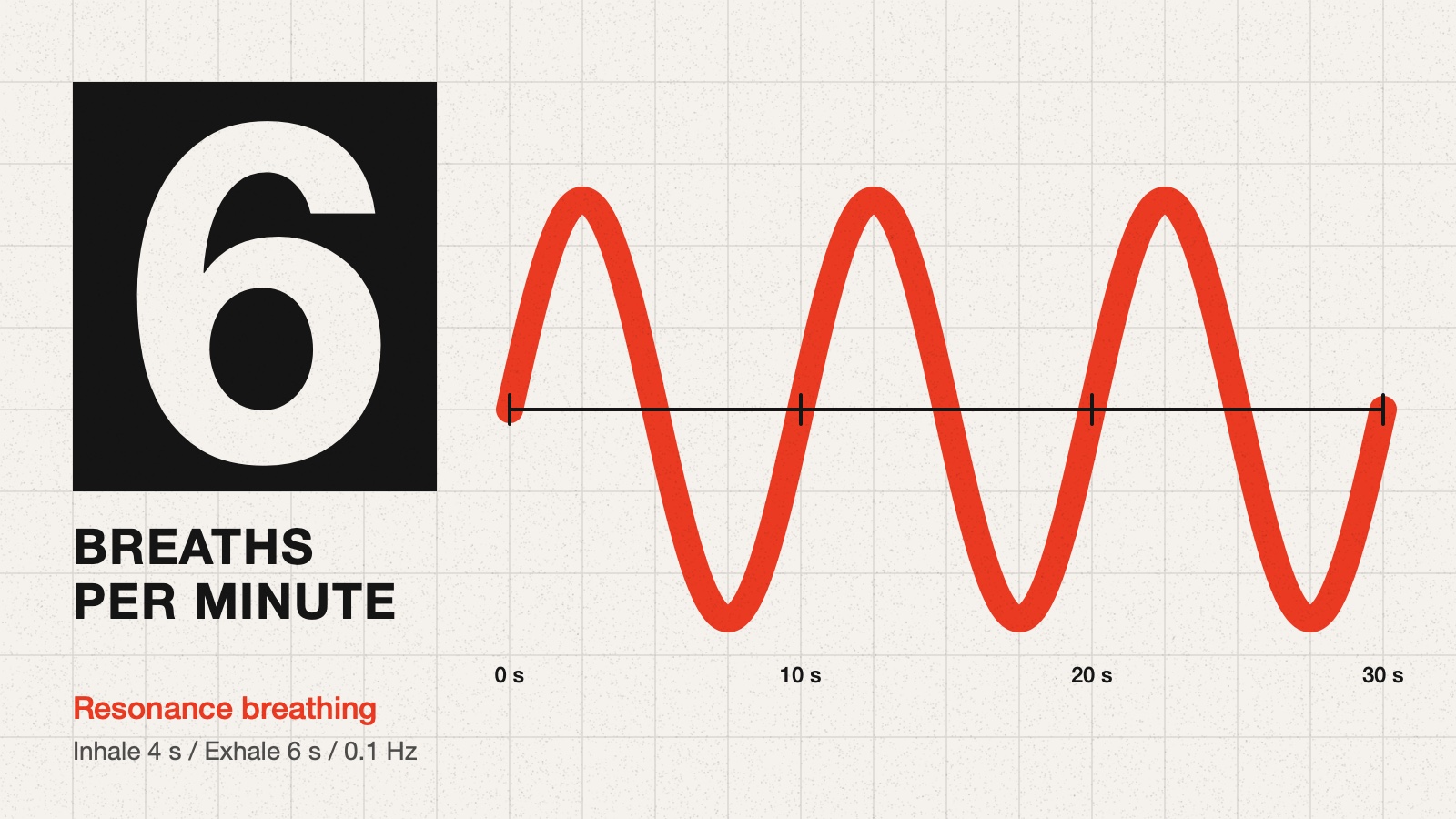
When you breathe slowly, especially at around 6 breaths a minute, the rhythms of your breath, heart rate and blood pressure line up and amplify each other. Stretch receptors in your lungs and pressure sensors in your arteries send that rhythm to the brainstem, where it appears to tilt your nervous system toward relaxation (Noble and Hochman, 2019). None of that depends on whether anything is recording it.
The research backs this up:
- A phone pacer was enough. In a 2019 randomized study, young adults did 15 minutes of slow-paced breathing each evening for 30 days, guided by a simple smartphone app. Compared with spending that time on social media, they reported better sleep and showed higher overnight vagal activity (Laborde et al., 2019).
- Slow breathing raises vagal HRV on its own. A 2022 meta-analysis of 223 studies found voluntary slow breathing increases vagally mediated HRV during practice, right after one session, and after multi-week programs (Laborde et al., 2022).
- Even prayer does it. A 2001 study in the BMJ found that reciting the rosary or a yoga mantra naturally slowed breathing to about 6 breaths a minute and produced strong, synchronized cardiovascular rhythms (Bernardi et al., 2001). No technology involved.
- One session can help. In a 2021 study, a single session of deep, slow breathing with a longer exhale increased a vagal HRV measure and reduced state anxiety in both younger and older adults (Magnon et al., 2021).
Feeling better even when the numbers don't move
One of the most interesting findings comes from the 2023 Stanford breathwork study. Participants practiced 5 minutes of breathing or mindfulness meditation every day for a month while wearing WHOOP straps. Mood improved and anxiety dropped, and breathwork, especially cyclic sighing, improved mood more than meditation. Yet resting heart rate and HRV did not change significantly in any group (Balban et al., 2023).
In other words, people felt better and breathed more slowly at rest, even though their HRV score barely budged. If you judge your practice only by a daily HRV number, you may miss real benefits. (Read more about the study in can 5 minutes of breathing a day improve your mood?)
The best breathing techniques for your nervous system
All of these need only a timer:
- Resonance breathing: smooth breathing at about 6 breaths a minute, such as 4 in and 6 out, or 5 in and 5 out. The pattern behind HRV biofeedback.
- Cyclic sighing: a double inhale and a long exhale for 5 minutes. The top performer for mood in the Stanford study.
- Long-exhale breathing: any pattern where the out-breath is longer than the in-breath, such as 4 in and 8 out.
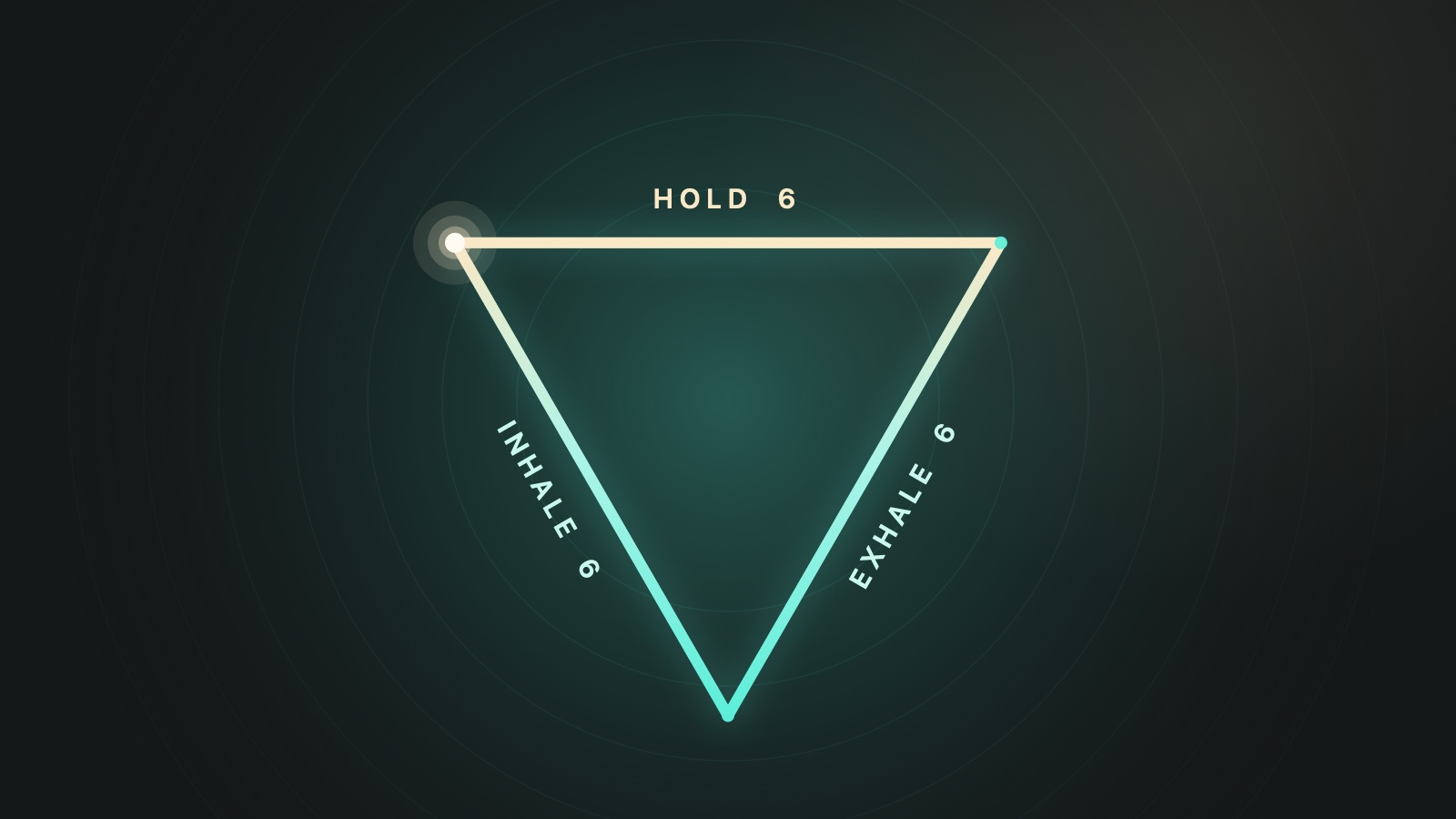
- Box breathing and triangle breathing: structured patterns with holds, popular for focus and stress.
A 2023 systematic review found the most effective programs for stress and anxiety used sessions of at least 5 minutes, repeated over time (Bentley et al., 2023). For the bigger picture, see does breathwork reduce stress and anxiety?. Consistency beats equipment.
How to track your progress without a wearable
You can still notice change without a sensor. Try these simple, private check-ins:
- Rate how you feel. Before and after each session, give your calm or stress level a number from 1 to 10. This is close to what the Stanford study did with daily questionnaires.
- Count your resting breaths. Once a week, sit quietly and count your breaths for one full minute. Most adults breathe 12 to 20 times a minute at rest. In the Stanford study, a lower resting breathing rate was one of the clearest changes.
- Notice how long it takes to settle. Over a few weeks, many people find they relax faster at the start of a session.
- Watch your sleep and mood. Are you falling asleep more easily? (See breathing exercises for sleep.) Recovering from a stressful moment faster? Those are the outcomes that matter.
When a wearable or biofeedback is worth it
Wearables are not the enemy. If you enjoy data, a heart rate sensor can help you fine-tune your personal resonance rate, and clinical HRV biofeedback with a trained practitioner has solid evidence: a 2020 meta-analysis of 58 randomized trials found small to moderate benefits, especially for anxiety, depression and performance (Lehrer et al., 2020). The point is simply that the device is optional. The breathing is not.
Common mistakes
Chasing a daily score. HRV naturally bounces around with sleep, alcohol, exercise and illness. One low reading does not mean your practice failed.
Waiting for the right gear. You can start today with 5 minutes and a timer.
Breathing too big. Slow does not mean huge. See does breathwork expand your lungs? Natural-sized breaths at a slow pace are calming; big ones can make you dizzy.
Skipping days. The research favors regular, repeated practice over occasional long sessions. To make it stick, see how to build a daily breathing habit.
The best app for nervous system regulation without a wearable: The Breath Interval
If you want to calm your nervous system without another device, account or data stream, The Breath Interval is a top custom breathing app built for that. It is a breath timer, not a tracker: you set the rhythm, it keeps the pace with chimes, and nothing about your practice leaves your phone. That makes it one of the most private and flexible breathing apps for iPhone and iPad.
- No account, no analytics, no third-party services. Your rhythms and playlists are stored only on your device.
- No wearable needed. Set resonance breathing, cyclic sighing, long exhales, box or triangle breathing to the exact second.
- Chimes, not narration. A distinct chime for each phase lets you close your eyes and follow the sound.
- Works offline and locked. It keeps time with your screen off, so your phone can stay face down.
- Breathing playlists. With Pro, chain several rhythms into one session.
The Breath Interval is free to use, with an optional one-time Pro upgrade and no subscription. See all the breathing techniques you can build.
Safety notes
Slow breathing is gentle, but stop and breathe normally if you feel dizzy, light-headed, short of breath or unwell. Do not practice while driving or anywhere a loss of focus could be dangerous. A breathing practice is not a substitute for medical care: if you have a heart condition, take heart rhythm or blood pressure medication, or rely on a medical device to monitor your heart, keep using it as your doctor advises, and check with a qualified healthcare provider before starting a new breathing practice.