The vagus nerve has become one of the most talked-about parts of the body online. Videos promise to "reset" it, "hack" it or "unlock" it in 30 seconds. Vagal tone is a wellness buzzword, and nervous system regulation is everywhere.
Some of that excitement is earned. The vagus nerve really does connect your brain to your heart, lungs and gut, and the way you breathe really does influence it. But a lot of what you see online goes far beyond the evidence. This guide separates the science from the hype: what the vagus nerve is, what breathing can measurably do for it, what it can't, and how to practice in a way that is backed by research.
What is the vagus nerve?
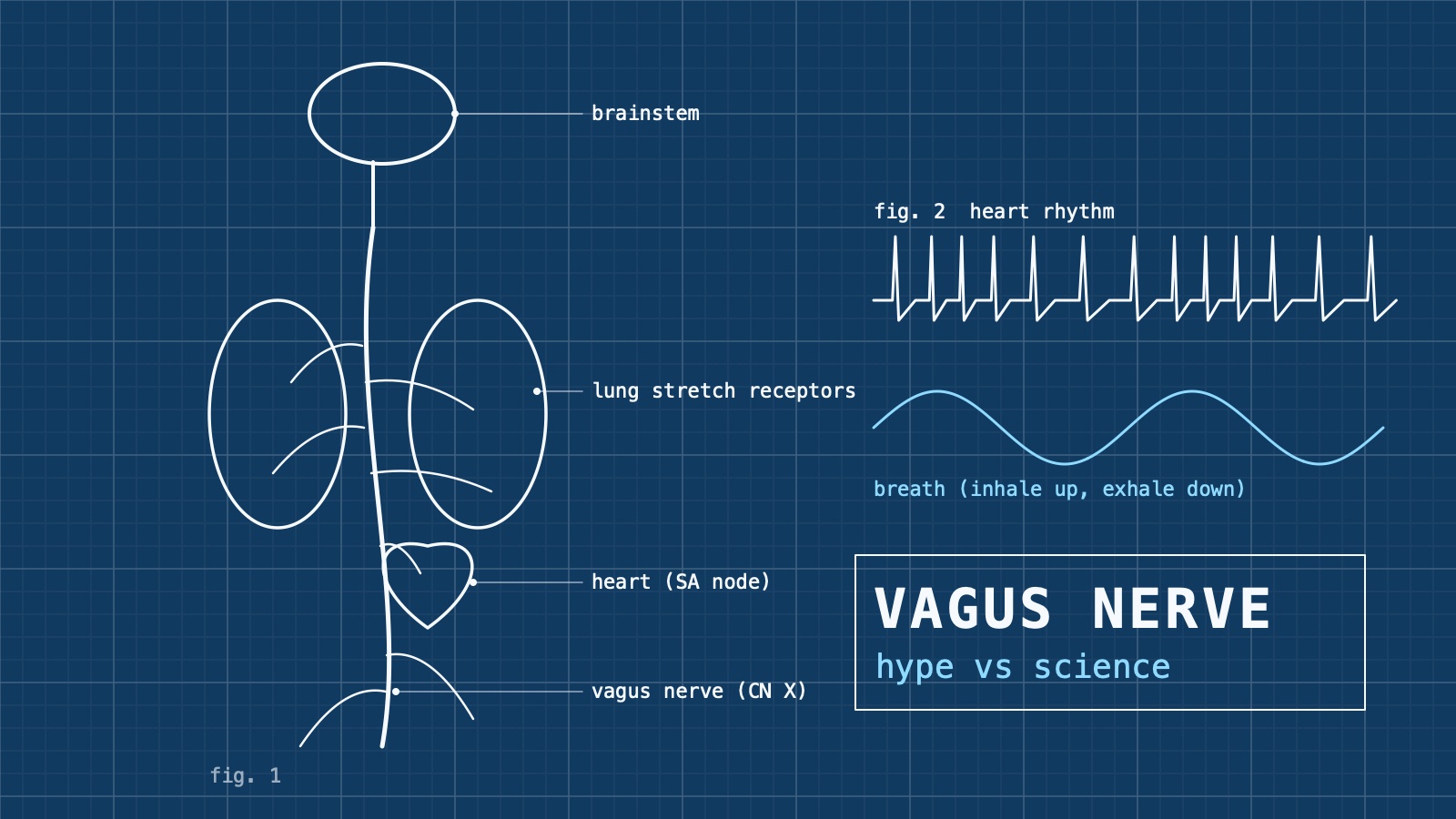
The vagus nerve is the longest cranial nerve in the body. It runs from the brainstem down through the neck to the heart, lungs and digestive tract. It is the main component of the parasympathetic nervous system, the rest-and-digest branch that helps your body recover from stress, and it plays a role in heart rate, digestion, immune response and mood (Breit et al., 2018).
Importantly, it is a two-way line. Most of its fibers carry information up from your organs to your brain, reporting on what is happening inside your body. That is part of why your breath, which you can control, can influence how calm you feel.
Myth vs fact: what breathing can and can't do
Myth: You can "reset" your vagus nerve in 30 seconds. Fact: There is no reset switch. What slow breathing can do is shift the balance of your nervous system toward the parasympathetic side while you practice and shortly after. A 2022 meta-analysis of 223 studies found voluntary slow breathing increases vagally mediated heart rate variability during the session, immediately after one session, and after multi-week programs (Laborde et al., 2022). That is real, measurable and useful. It is also gradual, not a one-time hack.
Myth: Your watch measures your vagal tone. Fact: Wearables estimate heart rate variability (HRV), which researchers use as an indirect sign of vagal activity. But HRV can be skewed by how you breathe, how much you move and other factors, and it should not be treated as a direct readout of vagal tone (Grossman and Taylor, 2007). Experts also warn that HRV findings are easy to misread (Laborde et al., 2017). More on this in you don't need a wearable to calm your nervous system.
Myth: If breathing works, your HRV will go up. Fact: Not always. In a 2023 Stanford trial, a month of daily breathwork improved mood and lowered resting breathing rate, yet resting heart rate and HRV did not change significantly (Balban et al., 2023). Benefits can show up in how you feel before they show up in a number.
Myth: Vagus nerve breathing can cure anxiety, depression or gut problems. Fact: Medical vagus nerve stimulation devices are being studied, and there is preliminary evidence for them as an add-on treatment in some hard-to-treat conditions (Breit et al., 2018). Breathing exercises are not the same thing as an implanted stimulator. Breathwork is linked to lower stress, anxiety and depressive symptoms in randomized trials (Fincham et al., 2023; see does breathwork reduce stress and anxiety?), but it is a wellness practice that can support care, not replace it.
Myth: Any trick that feels relaxing is "stimulating the vagus nerve." Fact: Many popular tips, like humming, gargling or splashing cold water on your face, are far less studied than slow breathing. They may feel good, and that is fine, but the strongest evidence by a wide margin is for slow, controlled breathing.
What the research actually supports
Here is what the evidence for breathing and the vagus nerve looks like when you stick to the studies:
- Slow breathing raises vagal HRV. The 223-study meta-analysis above is the clearest single piece of evidence (Laborde et al., 2022).
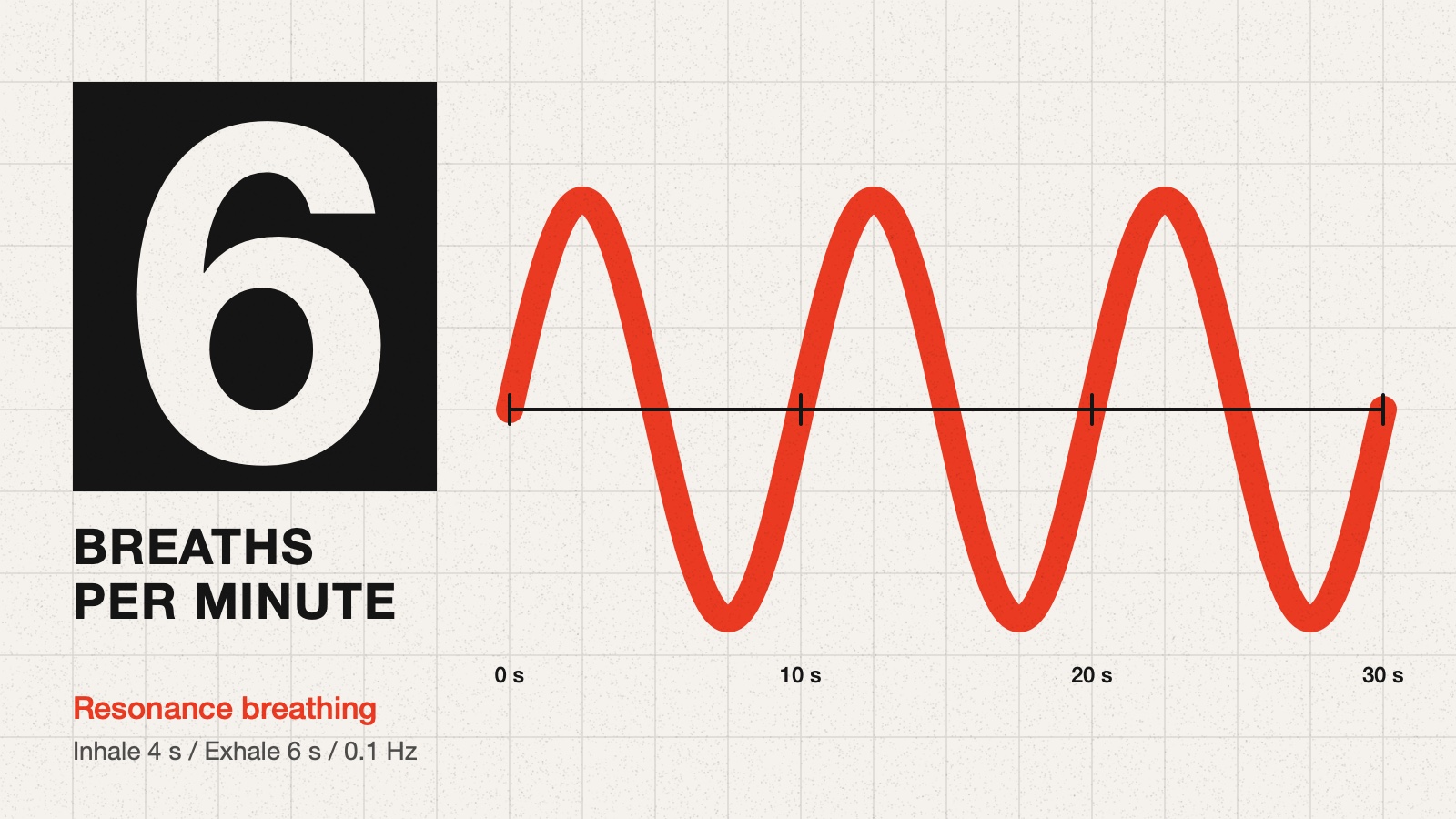
- Around 6 breaths a minute is a sweet spot. At this pace your breathing, heart rate and blood pressure rhythms line up and amplify each other, a state called resonance. Breathing at your own resonance rate improved mood more than breathing just one breath a minute faster (Steffen et al., 2017). See our guide to resonance breathing.
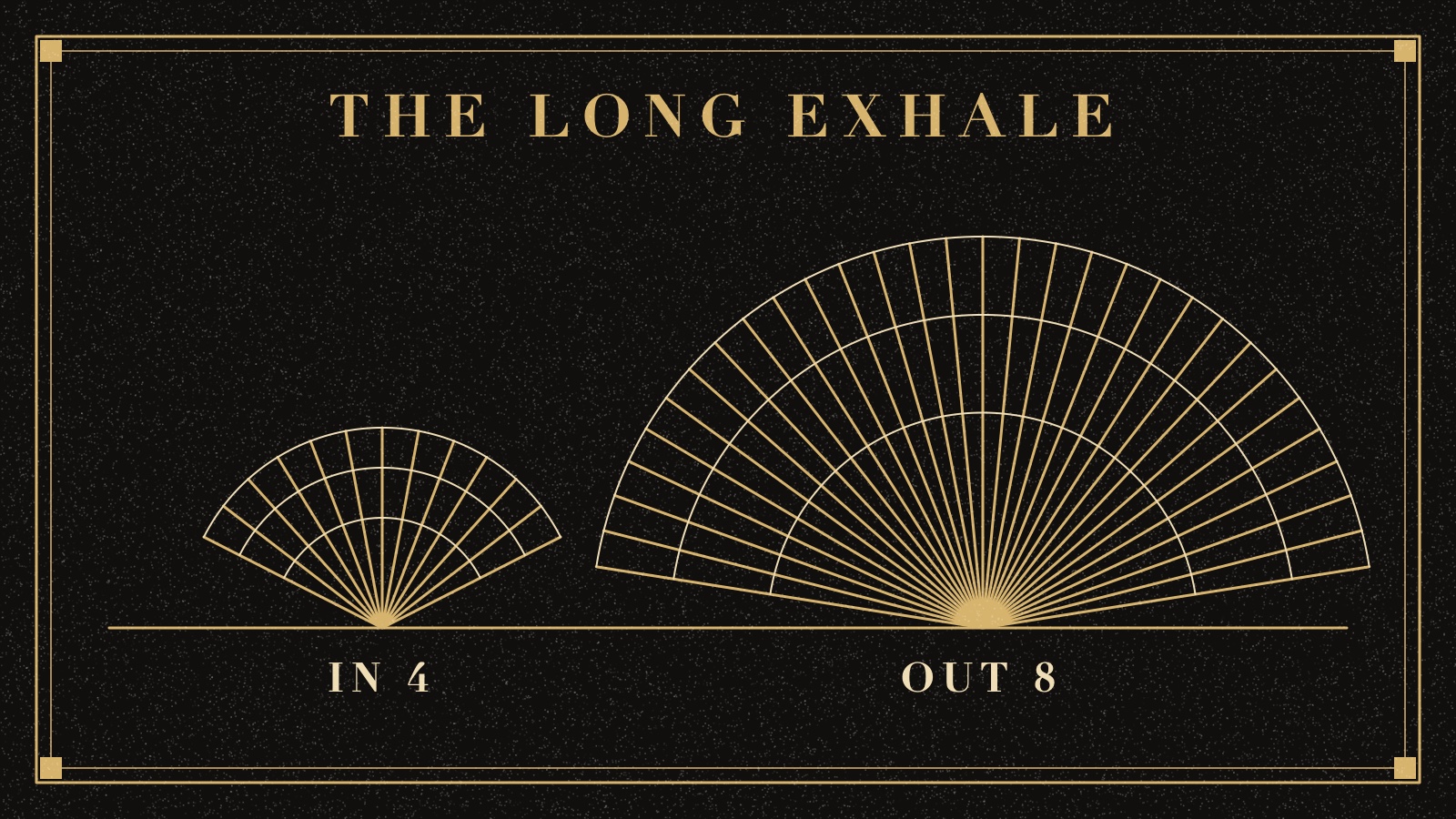
- Longer exhales help. Breathing with a long exhale made people feel more relaxed than a short exhale, and increased a vagal HRV measure when breathing was slow (Van Diest et al., 2014). See why longer exhales calm you down.
- Daily breathwork lifts mood. Five minutes a day of exhale-focused cyclic sighing gave the biggest daily mood improvement in the Stanford trial (Balban et al., 2023). See our cyclic sighing guide.
- There is a plausible mechanism. Researchers have proposed that controlled breathing works as a natural form of respiratory vagal nerve stimulation, which could help explain the benefits of meditation and yoga (Gerritsen and Band, 2018). Slow, deep breaths activate stretch receptors in the lungs and pressure sensors in the arteries that feed calming signals to the brainstem (Noble and Hochman, 2019).
- It also changes the brain. A systematic review found slow breathing was linked to more alpha brain waves, more comfort and relaxation, and less anxiety, anger and confusion (Zaccaro et al., 2018).
The takeaway: breathing is one of the few ways you can deliberately influence your vagus nerve, and the science behind slow breathing is solid. The hype comes from overstating how fast, how dramatic and how permanent the effects are.
A note on polyvagal theory
You may have come across polyvagal theory, a popular framework in therapy and wellness circles that ties the vagus nerve to feelings of safety and social connection. It has been influential, but parts of it are disputed. Researchers who study the heart's rhythm have argued that some of its claims about how vagal control evolved are not accurate (Grossman and Taylor, 2007). You don't need to accept any one theory to benefit from slow breathing; the effects of slow breathing on heart rate variability and mood have been measured directly.
How to practice vagus nerve breathing, based on the evidence
1. Breathe slowly. Aim for about 5 to 6 breaths a minute, such as 5 seconds in and 7 out, or 4 in and 6 out.
2. Make the exhale longer. Breathe out a little longer than you breathe in.
3. Breathe low and gently. Let your belly rise on the inhale. See what diaphragmatic breathing really changes. Keep each breath a natural size.
4. Practice for at least 5 minutes. A 2023 review found effective programs for stress and anxiety used sessions of 5 minutes or more, repeated over time (Bentley et al., 2023).
5. Make it a habit. Daily practice over weeks is where the research shows the clearest benefits. Here is how to build a daily breathing habit.
How to spot vagus nerve hype
Be skeptical of any claim that:
- promises a permanent reset from one technique
- names a specific disease that breathing will cure
- tells you to stop a treatment your doctor prescribed
- cites no studies, or only cites theory
- requires an expensive device or program to "unlock" your vagus nerve
Good breathing advice is usually simple, slow and a little boring. That is a feature, not a bug.
Common mistakes
Expecting instant, dramatic change. The effects are real but gentle, and they build with practice.
Breathing too hard. Forceful, fast or very deep breathing is not calming. Slow and natural-sized is the goal.
Judging success only by HRV. Notice your mood, sleep and how quickly you settle after stress too.
Using breathwork instead of care. It works best alongside medical or mental health care, not in place of it.
The best app for vagus nerve breathing: The Breath Interval
The breathing patterns with the best evidence, slow breathing, resonance breathing and long exhales, all depend on one thing: keeping an exact, slow pace for several minutes. The Breath Interval is a top custom breathing app built for that. You set every phase to the exact second, so you can practice the patterns the research supports, not whatever a preset decides. That makes it one of the most flexible breathing apps for nervous system regulation on iPhone and iPad.
- Research-based rhythms. Build 4-6, 5-7, cyclic sighing, box or triangle breathing in seconds.
- Chimes, not narration. A distinct chime for each phase, so you can close your eyes.
- No hype, no tracking. No account, no analytics, no third-party services and no wearable required. Your rhythms stay on your device.
- Sessions that fit your day. Set 5, 10 or 20 minutes; it keeps time offline with the screen locked.
- Breathing playlists. With Pro, combine several techniques into one session.
The Breath Interval is free to use, with an optional one-time Pro upgrade and no subscription. See all the breathing techniques you can build.
Safety notes
Slow breathing is gentle, but stop and breathe normally if you feel dizzy, light-headed, short of breath or unwell. Do not practice while driving or anywhere a loss of focus could be dangerous. Breathing exercises are not a treatment for any medical or mental health condition. If you are pregnant, have a heart, lung or digestive condition, fainting episodes, depression or an anxiety disorder, check with a qualified healthcare provider before starting a new breathing practice, and do not stop any prescribed treatment.