"Expand your lungs" is one of the most common promises in the world of breathwork. It sounds great: breathe the right way and your lungs will grow, hold more air and deliver more oxygen. The real story is more interesting, and more useful.
In healthy adults, the size of your lungs is mostly set by your body: your height, your rib cage and your age. Breathing exercises are not known to make healthy lungs physically bigger. What they can change is how well you use the lungs you have: how strong your breathing muscles are, how deeply and efficiently you breathe, and how your nervous system responds. This guide covers what diaphragmatic breathing and other breathing exercises for lung health really change, what the research says, and how to practice.
Can breathing exercises increase lung capacity?
Lung capacity usually means the total amount of air your lungs can hold. It depends largely on your body size and shape, and it naturally declines slowly with age. There is little evidence that breathing exercises meaningfully increase total lung capacity in healthy adults.
But "capacity" is not the whole picture. When people say breathwork helped their lungs, they usually mean one of these:
- They use more of their lungs. Shallow chest breathing leaves the lower lungs underused. Slow belly breathing fills them more fully.
- Their breathing muscles got stronger. The diaphragm is a muscle, and like any muscle it responds to training.
- They breathe more efficiently. Slower, deeper breaths move air more efficiently than fast, shallow ones.
- They feel less breathless. Calmer breathing patterns can reduce the sensation of breathlessness, especially with lung disease.
What diaphragmatic breathing actually changes
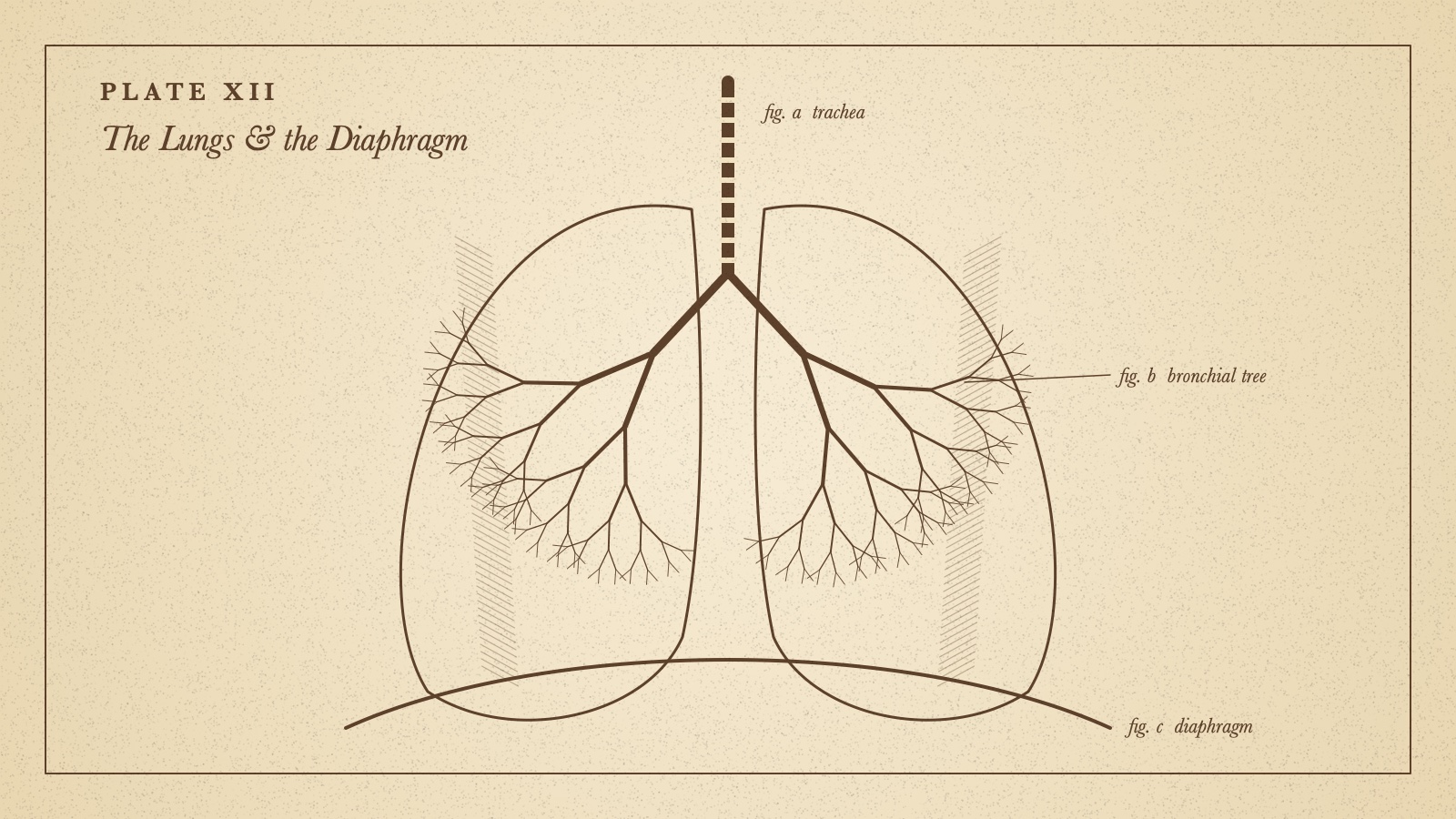
The diaphragm is a dome-shaped muscle under your lungs. When it contracts, it flattens and pulls air in, and your belly gently moves out. That is diaphragmatic breathing, also called belly breathing or abdominal breathing.
A review of slow breathing in healthy people found effects on diaphragm activity, ventilation efficiency, blood flow, heart rate variability and the balance of the nervous system (Russo et al., 2017). Breathing slowly and deeply means a larger share of each breath reaches the air sacs where gas exchange happens, rather than just filling your airways.
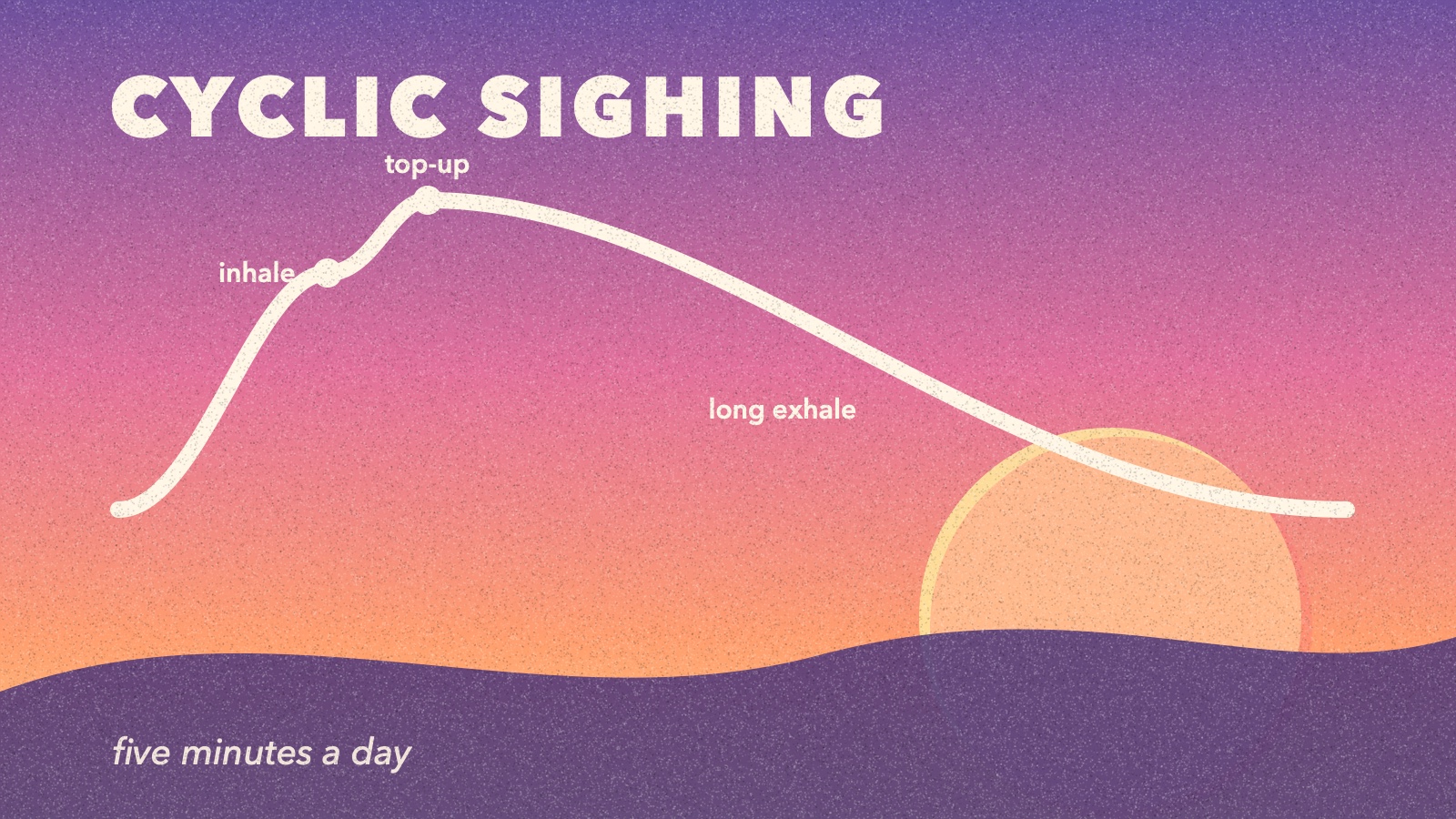
Deep breaths also matter for the tiny air sacs themselves. Your body takes a big sigh every few minutes precisely to reopen air sacs that slowly collapse during quiet breathing (Severs et al., 2022). More on that in the physiological sigh.
How to do diaphragmatic breathing, step by step
1. Get comfortable. Lie on your back with your knees bent, or sit upright. Put one hand on your chest and one on your belly.
2. Breathe in slowly through your nose. Let your belly rise under your lower hand. Your chest hand should move only a little.
3. Breathe out slowly. Let your belly fall. Exhale through pursed lips, as if blowing gently on a candle, to make the breath out a little longer.
4. Slow it down. Aim for an inhale of about 4 to 6 seconds and an exhale of 6 to 9 seconds.
5. Practice for 5 to 10 minutes. Once or twice a day is a good start.
If your chest is doing most of the work, try lying down with a light book on your belly and watch it rise and fall.
What the research says
- Stress, focus and cortisol. In a 2017 randomized study, healthy adults trained in diaphragmatic breathing for 20 sessions over 8 weeks, breathing at about 4 breaths a minute. Compared with a control group, they had better sustained attention, less negative mood and lower cortisol, a stress hormone (Ma et al., 2017).
- A broad review. A 2020 narrative review of 10 systematic reviews and 15 randomized trials found diaphragmatic breathing appears to improve exercise capacity and respiratory function in people with COPD, and may help with stress, anxiety and high blood pressure. The author cautions that many studies were low quality (Hamasaki, 2020).
- Stress reduction. A systematic review of diaphragmatic breathing as a stand-alone practice found that all three qualifying studies showed lower stress, measured by cortisol, breathing rate, blood pressure or questionnaires, though the studies were small (Hopper et al., 2019).
- Breathing muscle training. A meta-analysis of randomized trials in athletes found that respiratory muscle training improved inspiratory muscle strength and endurance in most studies, and improved some sport performance outcomes (HajGhanbari et al., 2013).
- Lung disease. A Cochrane review of breathing exercises for COPD found that 4 to 15 weeks of breathing exercises, including yoga breathing, pursed-lip breathing and diaphragmatic breathing, improved how far people could walk in six minutes, but effects on breathlessness and quality of life were inconsistent (Holland et al., 2012).
The takeaway: breathwork won't make healthy lungs bigger, but it can train your breathing muscles, make each breath more efficient and calm your nervous system. That is a wellness benefit, not a treatment for lung disease.
Breathing exercises for lung health
- Diaphragmatic breathing: the foundation. Slow belly breaths, 5 to 10 minutes a day.
- Pursed-lip breathing: breathe in through the nose, out slowly through pursed lips. Often taught to people with COPD to ease breathlessness.
- Resonance breathing: smooth breathing at about 6 breaths a minute, which also trains steady, deep breaths.
- Long-exhale breathing: breathing out longer than you breathe in, which helps you empty your lungs fully.
- Movement: walking, swimming and cycling train your breathing muscles naturally.
What about breathing trainers?
Handheld inspiratory muscle trainers make you breathe in against resistance, like a workout for the diaphragm. They have research behind them for strength and performance, and for blood pressure (see breathing exercises to lower blood pressure). They are a different tool from paced breathing. If you are interested, ask a healthcare provider whether one is right for you.
Common mistakes
Breathing as big as possible. Huge breaths can make you dizzy. Deep and slow, not forced.
Lifting your shoulders. Shoulders up means you are chest breathing. Let them stay soft.
Holding tension in your belly. If your stomach is clenched, your diaphragm can't move freely.
Expecting overnight change. Breathing muscles, like other muscles, adapt over weeks.
The best app for diaphragmatic breathing: The Breath Interval
Diaphragmatic breathing works best when the breath is slow and steady, and that is hard to keep up by counting. The Breath Interval is a top custom breathing app that paces each inhale and exhale to the exact second with a chime, so you can focus on your belly instead of the count. That makes it one of the most flexible breathing exercise apps for lung health on iPhone and iPad.
- Any pace you need. Start at 4 in, 6 out and slow down to 6 in, 9 out over time.
- Chimes, not narration. Close your eyes and feel your belly rise and fall.
- Your own phases. Add a pursed-lip exhale or a short pause and name it.
- Breathing playlists. With Pro, pair belly breathing with a slow-exhale cooldown.
- Private by design. No account, no sign-in, no analytics, and it works offline.
The Breath Interval is free to use, with an optional one-time Pro upgrade and no subscription. Tap the rhythm below to open a slow diaphragmatic pattern in the app.
Safety notes
Stop and breathe normally if you feel dizzy, light-headed or short of breath. Breathing exercises do not replace medical treatment. If you have asthma, COPD, another lung condition, a heart condition, or you are recovering from surgery or illness, follow the breathing plan your healthcare team gives you and check with them before starting something new.