"Take a deep breath" is the most common advice for calming down. The research suggests a better version: take a long breath out. When the exhale is longer than the inhale, your body leans toward its rest-and-digest state, and studies show people feel more relaxed than when they breathe in and out for the same length of time.
This simple idea, often called extended exhale breathing, long-exhale breathing or exhale-focused breathing, is behind several of today's most popular techniques, from cyclic sighing to 4-7-8 breathing. This guide explains why longer exhales calm you down, how to do it step by step, which ratios to try, and what the research says.
What is extended exhale breathing?
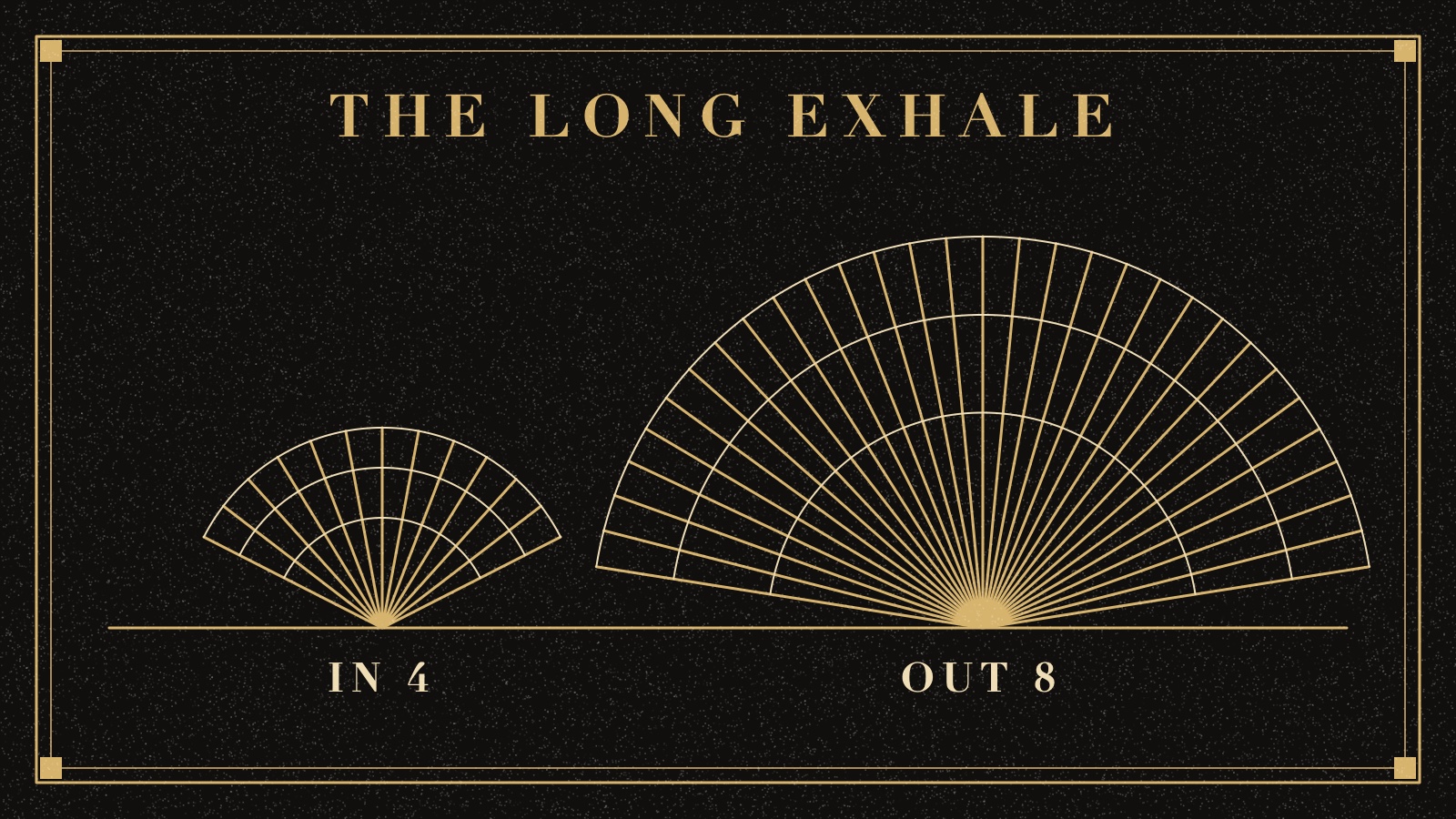
Extended exhale breathing simply means breathing out for longer than you breathe in. Researchers describe this with the inhale-to-exhale ratio (I:E ratio). A 4-second inhale and 8-second exhale is a 1:2 ratio. Equal breathing, such as 5 in and 5 out, is 1:1.
Common long-exhale patterns include:
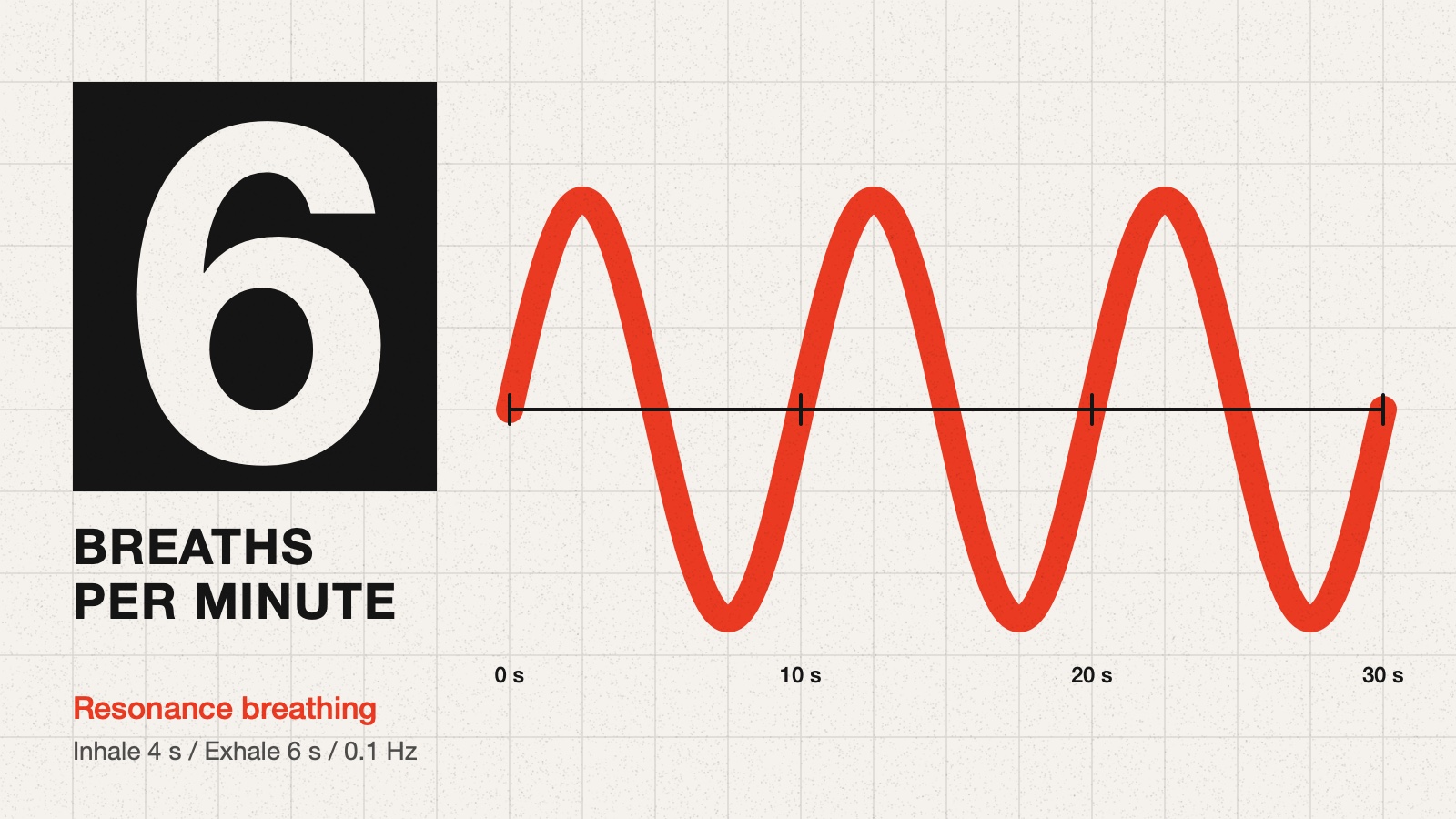
- 4 in, 6 out: a gentle 1:1.5 ratio, and exactly 6 breaths a minute
- 4 in, 8 out: a classic 1:2 ratio, 5 breaths a minute
- 3 in, 6 out: an easier 1:2 for beginners
- Cyclic sighing: a double inhale followed by a long exhale (see our cyclic sighing guide and the physiological sigh)
Why longer exhales calm you down
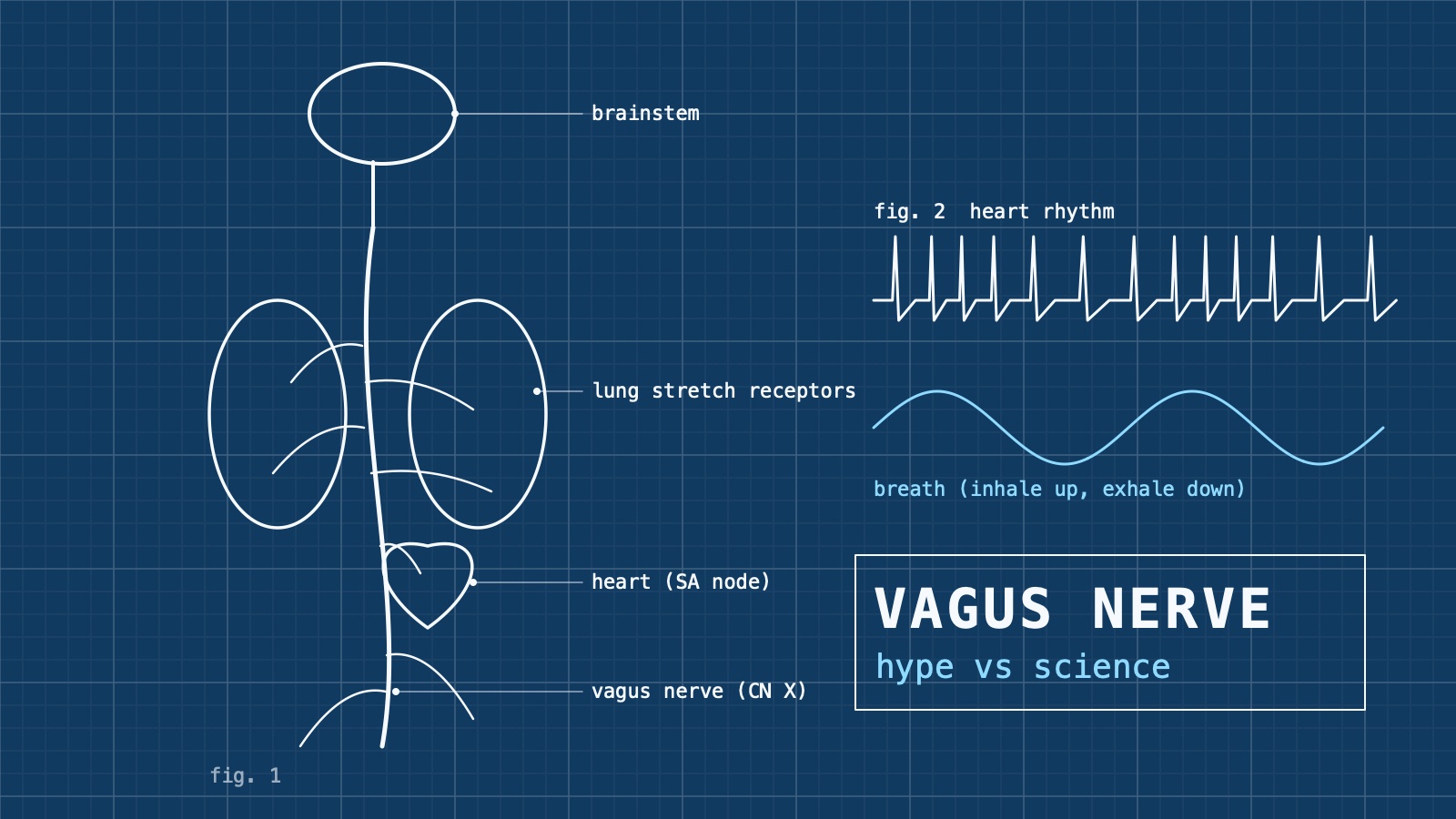
Your heart rate rises a little with every inhale and falls with every exhale. This normal rhythm is called respiratory sinus arrhythmia. During the exhale, the vagus nerve, the main nerve of the parasympathetic nervous system, puts a gentle brake on your heart. During the inhale, that brake eases off.
So when you stretch the exhale, you spend a bigger share of every breath in the slowing-down phase. Researchers who study heart rate variability biofeedback note that longer exhalations may increase the size of these heart rate swings, because vagal output to the heart has more time to act with each breath (Lehrer and Gevirtz, 2014).
There is a second mechanism too. During a slow, deep exhale, pressure sensors in your arteries called baroreceptors are activated and signal the brainstem to increase parasympathetic outflow to the heart (Noble and Hochman, 2019). In short, the exhale is the calming half of the breath. (For what this does and doesn't mean for "vagal tone," see vagus nerve breathing: hype vs science.)
How to do extended exhale breathing, step by step
1. Sit or lie comfortably. Relax your shoulders and jaw. Rest a hand on your belly.
2. Breathe in through your nose for 4 seconds. Let your belly rise. This is diaphragmatic breathing, or belly breathing.
3. Breathe out slowly for 6 to 8 seconds. Exhale through pursed lips, as if blowing gently through a straw, or through your nose. Keep it smooth and even all the way to the end.
4. Don't force it. Let the exhale be soft, not squeezed. If you run out of air early, shorten the count.
5. Repeat for 5 minutes. Go straight from the end of one exhale into the next inhale.
If 4 in and 8 out feels long, start at 3 in and 5 out and lengthen the exhale by one second every few days.
What the research says
- The ratio itself matters. In a 2014 experiment, 30 people breathed at either 6 or 12 breaths a minute, with either a short or a long exhale. The long-exhale patterns made people feel more relaxed, less stressed and more mindful than the short-exhale patterns. Slowing down alone mainly boosted positive energy. When breathing was slow, a long exhale also increased a vagal measure of heart rate variability. The authors concluded the I:E ratio is "an important modulator" of the effects of slow breathing (Van Diest et al., 2014).
- One session, two age groups. In a 2021 study, a single session of deep, slow breathing with a longer exhale increased a vagal HRV measure and reduced state anxiety in both younger and older adults, with a bigger vagal boost in older adults (Magnon et al., 2021).
- Before a stressful event. In a 2026 randomized trial, a prolonged-exhalation technique done before a standardized social stress test softened the rise in heart rate, state anxiety and a saliva stress marker compared with normal breathing (McAllister et al., 2026).
- Every day for a month. In a 2023 Stanford trial, the exhale-focused cyclic sighing produced the biggest daily improvement in positive mood and the largest drop in breathing rate of all the practices tested (Balban et al., 2023).
- In the clinic. A practical guide for HRV biofeedback practitioners recommends a longer exhalation than inhalation when assessing a person's resonance frequency (Shaffer and Meehan, 2020).
The takeaway: if you want a breathing exercise to calm you down, making the exhale longer is one of the simplest, best-supported changes you can make. It is a wellness practice, not a treatment for any medical condition.
Which inhale-to-exhale ratio is best?
There is no single perfect ratio. A few guidelines:
- Start gentle. A 1:1.5 ratio, such as 4 in and 6 out, is easy for most people and lands at 6 breaths a minute, close to most adults' resonance breathing rate.
- Build to 1:2. Once that feels easy, try 4 in and 8 out.
- Keep it slow overall. In the 2014 study, the vagal benefit of a long exhale showed up when breathing was also slow (Van Diest et al., 2014).
- Comfort wins. If you feel air hunger, shorten the exhale. A calm 1:1.5 beats a strained 1:3.
When to use long-exhale breathing
- Before a stressful moment: a presentation, an interview, a hard conversation or a medical appointment
- When you feel anxious or wound up: a few minutes of long exhales can take the edge off
- To wind down before sleep: pair it with dim light and a quiet room
- After a workout: gentle long exhales without holds can help you recover
- As a daily habit: 5 minutes a day is enough to start (here's how to make it stick)
Long exhales vs box breathing vs 4-7-8
- Long-exhale breathing (for example 4-8): no holds, exhale twice as long as the inhale. Smooth, simple and easy to sustain.
- Box breathing (4-4-4-4): equal inhale, hold, exhale and hold. Structured and focusing, but the exhale is not longer than the inhale.
- Triangle breathing (4-4-4): inhale, hold, exhale. One hold, equal phases.
- 4-7-8 breathing: inhale 4, hold 7, exhale 8. A long exhale plus a long hold. Popular for sleep, but the hold makes it harder for some people.
If breath holds make you uneasy, a plain long-exhale pattern gives you the calming exhale without them.
Common mistakes
Squeezing the last bit of air out. The exhale should be slow and relaxed, not forced. Stop when your lungs feel comfortably empty.
Gasping on the inhale. If the next inhale is a gulp, the exhale was too long. Shorten it.
Breathing too deeply. Natural-sized breaths are enough. Huge breaths can leave you light-headed.
Speeding up your count. Counts drift faster when your mind wanders. An audio cue keeps the ratio honest.
The best app for extended exhale breathing: The Breath Interval
Long-exhale breathing only works if the exhale really is longer, every breath, for the whole session. The Breath Interval is a top custom breathing app that lets you set the inhale and the exhale separately, to the exact second, so 4-6 is exactly 4-6 and moving up to 4-8 takes a couple of taps. That makes it one of the best apps for exhale-focused breathing on iPhone and iPad.
- Any ratio. 4-6, 4-8, 3-6, 5-10, or add holds for 4-7-8. Save each one as its own rhythm.
- A chime for each phase. Close your eyes and let the sound tell you when to switch.
- Ends on an exhale. Set the length and the session finishes on a full out-breath.
- Breathing playlists. With Pro, start with a few minutes at 4-6 and move to 4-8 in one session.
- Private by design. No account, no sign-in, no analytics, and it works offline with your screen locked.
The Breath Interval is free to use, with an optional one-time Pro upgrade and no subscription. Tap the rhythm below to open a 4-8 pattern in the app.
Safety notes
Long-exhale breathing is gentle, but stop and breathe normally if you feel dizzy, light-headed, short of breath or unwell. Never force the exhale. Do not practice while driving or anywhere a loss of focus could be dangerous. If you are pregnant, or have asthma, COPD, a heart condition or another medical condition, or an anxiety or panic disorder, check with a qualified healthcare provider before starting a new breathing practice.