You sigh far more often than you notice. Every few minutes, without thinking about it, your body takes a breath that is bigger than the rest, often with a little extra sip of air on top, followed by a long, relaxed breath out. That is the physiological sigh, and scientists now see it as one of the body's built-in tools for resetting both your lungs and your stress level.
The physiological sigh has become famous as a fast way to calm down, often described as the quickest real-time stress reliever we know of. This guide explains what a sigh actually does in your body, how to do a physiological sigh on purpose, what the research says, and when one or two sighs is all you need.
What is the physiological sigh?
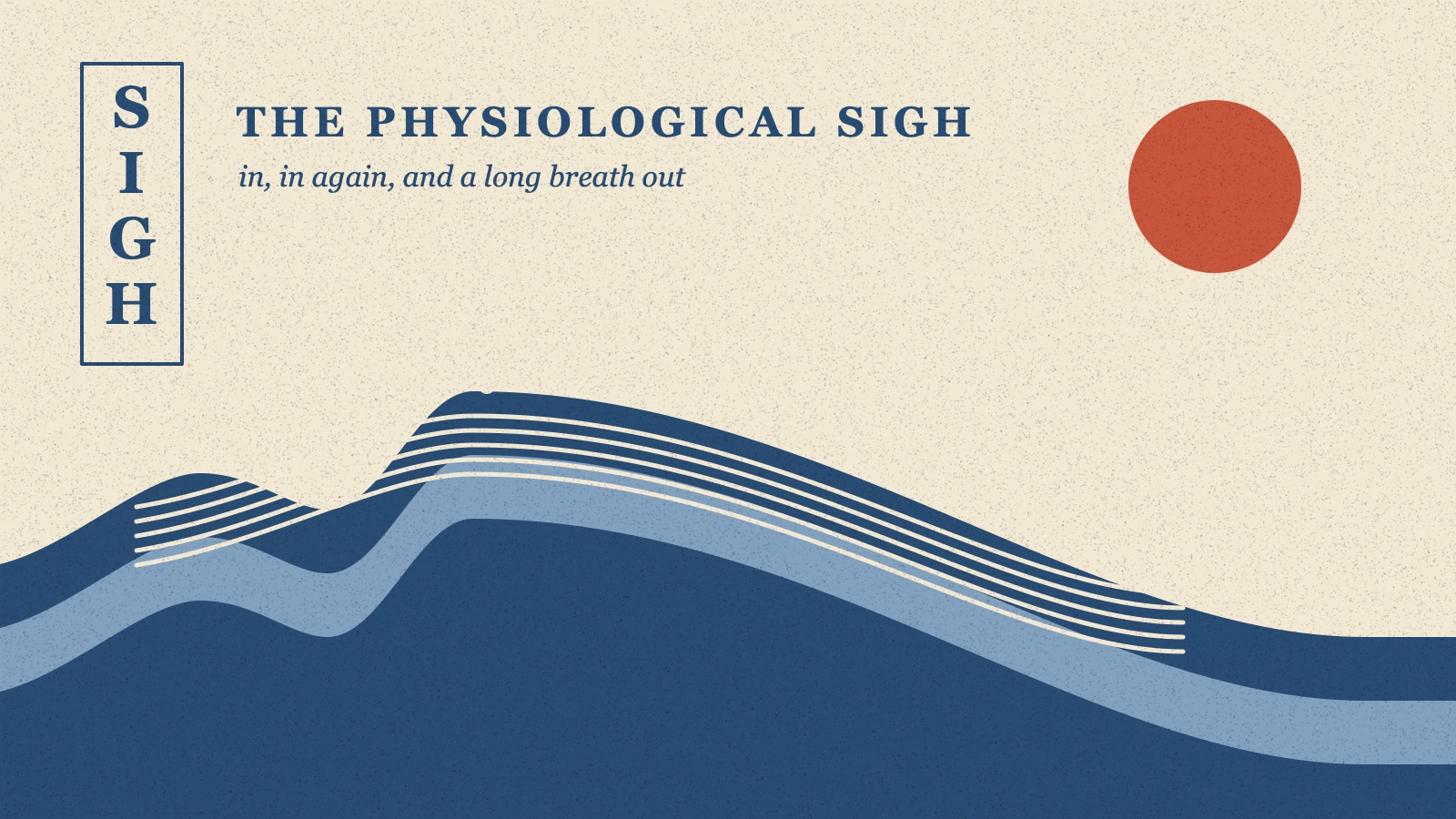
A physiological sigh is a double inhale followed by a long exhale:
- A full breath in, usually through the nose
- A second, shorter inhale on top of the first, to fill the lungs completely
- A slow, extended exhale, often through the mouth
You do not need to learn it from scratch. It is a reflex. Researchers who study breathing describe sighs as a distinct breathing behavior generated in the same brainstem network that produces every normal breath, the preBötzinger complex. Normal breaths come every few seconds; sighs arrive every few minutes (Severs et al., 2022). In mice, scientists have even mapped the small groups of neurons that turn an ordinary breath into a sigh (Li et al., 2016).
Why your body sighs: the lung reset
Your lungs contain hundreds of millions of tiny air sacs called alveoli, where oxygen enters your blood. During quiet breathing, some of them gradually deflate and stick closed. A sigh's bigger breath pops them back open. Reviews of sigh physiology describe this as a critical role: sighs help control how easily the lungs stretch by preventing the alveoli from collapsing (Severs et al., 2022).
Sighs also go up when oxygen is low and during stress, which is one reason you may notice yourself sighing a lot on a hard day (Li et al., 2016).
Why sighing calms you: the mind reset
A sigh is not only mechanical. Researchers have proposed that a sigh works as a psychophysiological reset: it restores a healthy variability to your breathing pattern and brings a feeling of relief (Vlemincx et al., 2013). A more recent review argues that sighs help you move from one emotional state to the next, such as from tension to calm, which supports what the authors call psychophysiological flexibility (Vlemincx et al., 2022). A neuroscience review adds that sighs reflect changes in brain state and reset breathing variability (Ramirez, 2014).
The long exhale matters too. Your heart naturally slows during every exhale as the vagus nerve, the main nerve of the parasympathetic nervous system, applies a gentle brake. A long exhale gives that brake more time to work. We explain this in why longer exhales calm you down.
How to do a physiological sigh, step by step
1. Inhale through your nose. Take a comfortable, full breath. Not a gasp.
2. Take a second, shorter inhale. When your lungs feel full, sip in a little more air through your nose. It will be smaller than the first breath. That is normal.
3. Exhale slowly through your mouth. Let the air out long and relaxed, until your lungs feel comfortably empty. Make the exhale longer than both inhales together.
4. Repeat once or twice. For a quick reset, one to three sighs is usually enough. Then let your breathing return to normal.
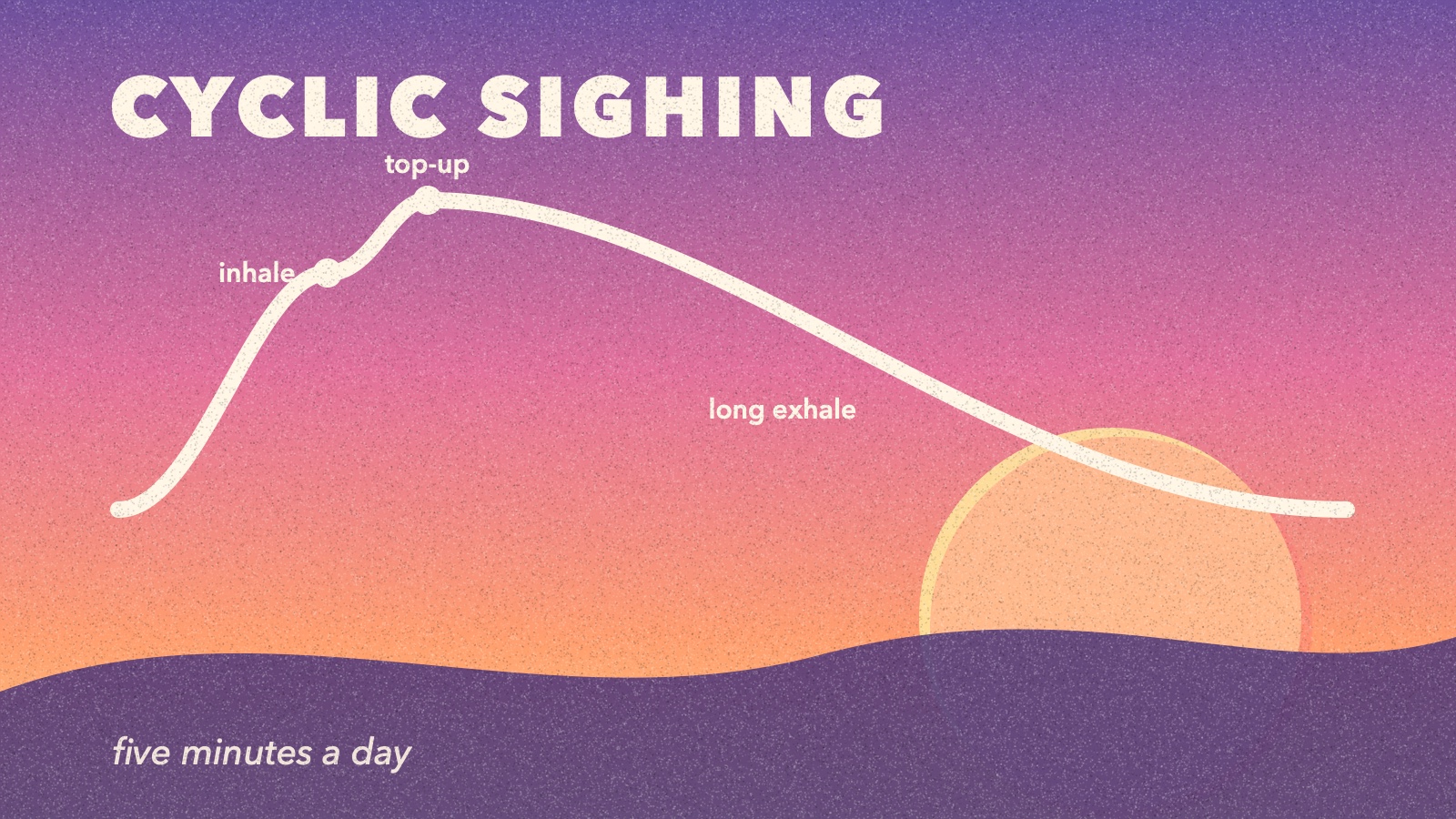
A comfortable rhythm is about 3 seconds in, 1 second top-up, 8 seconds out.
One sigh or five minutes?
There are two ways to use the physiological sigh:
- In the moment: one to three deliberate sighs when stress spikes, before a meeting, in traffic or after a tense message. This is the quick reset.
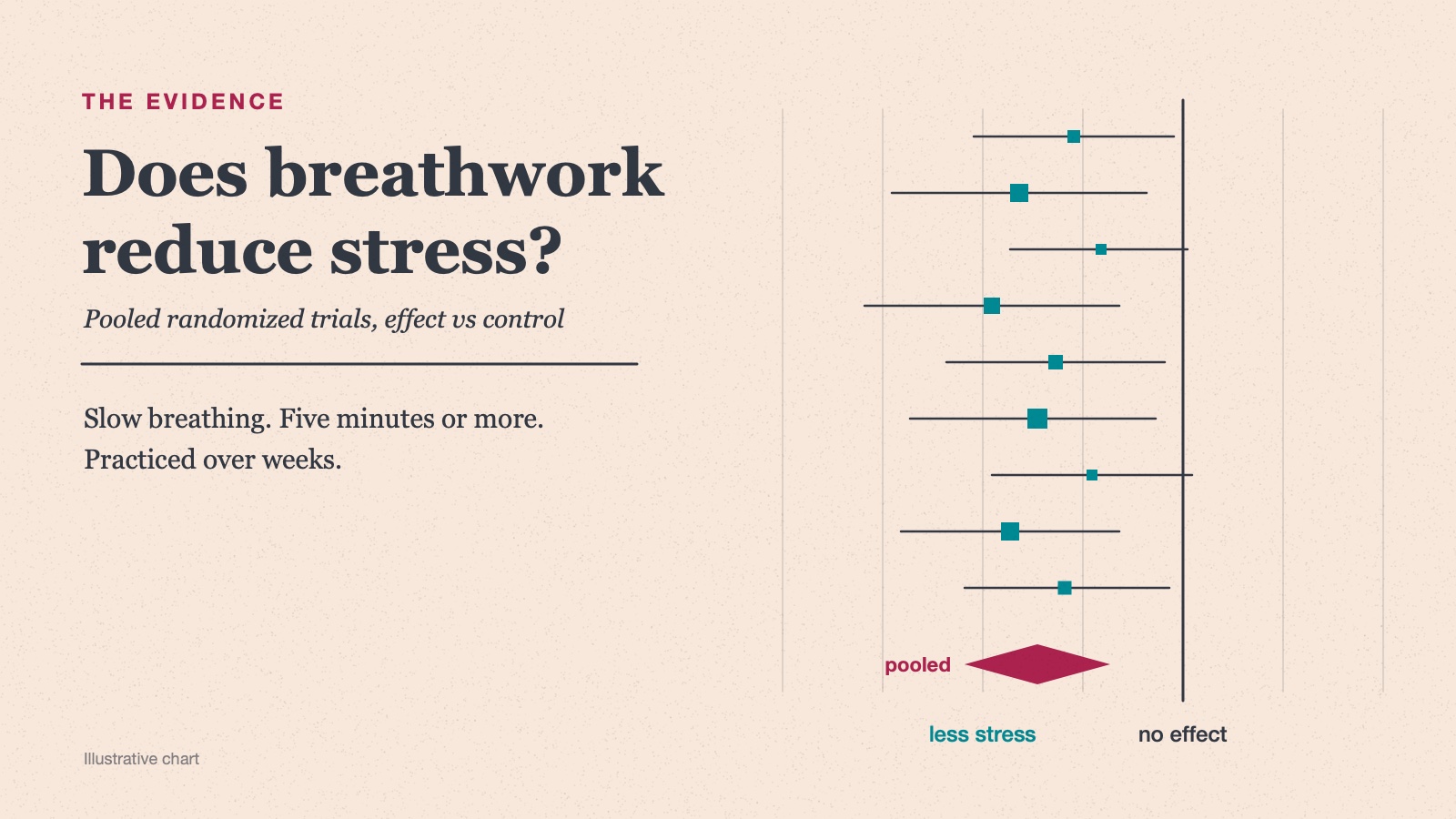
- As a daily practice: repeating the sigh for 5 minutes, called cyclic sighing. In a 2023 Stanford trial, 5 minutes a day of cyclic sighing for a month gave the biggest daily improvement in positive mood and the largest drop in resting breathing rate of the practices tested (Balban et al., 2023). We cover that study in detail in our cyclic sighing guide.
And for real-life stress, a 2026 pilot study found that just one minute of cyclic sighing in stressful moments was linked to bigger drops in anxiety than doing nothing (Riedl et al., 2026).
What the research says
- Sighs are a hard-wired reflex. Sighing is controlled by a dedicated brainstem circuit and happens every few minutes (Li et al., 2016; Severs et al., 2022).
- Sighs keep lungs open. They prevent the collapse of alveoli and help maintain lung compliance (Severs et al., 2022).
- Sighs reset breathing and emotion. Reviews propose that sighs reset breathing variability and help transitions between emotional states, bringing relief (Vlemincx et al., 2013; Vlemincx et al., 2022).
- Deliberate sighing lifts mood. Daily cyclic sighing improved mood more than mindfulness meditation in a randomized trial (Balban et al., 2023).
- Too much sighing is a different story. Excessive sighing has been linked to breathing symptoms and dysregulation, and frequent sighing can show up in panic disorder (Ramirez, 2014; Vlemincx et al., 2022). The goal is a few calm, intentional sighs, not constant big breaths.
The takeaway: the physiological sigh is one of the simplest, most natural breathing techniques for stress relief, backed by a growing body of research. It is a wellness practice, not a treatment for anxiety or panic disorder.
When to use a physiological sigh
- When stress spikes: a difficult email, a near miss on the road, a crying child
- Before a performance: a presentation, a game, an exam or an interview
- When you feel stuck in tension: shoulders up, jaw tight, breath shallow
- At the end of the workday: to mark the shift from work to home
- When you can't sleep: a couple of sighs, then a slow bedtime breathing routine
Physiological sigh vs other calming techniques
- Physiological sigh: one to three double-inhale, long-exhale breaths. Fastest to use in the moment.
- Cyclic sighing: the same breath repeated for 5 minutes as a daily practice.
- Resonance breathing: smooth breathing at about 6 breaths a minute, for longer sessions.
- Box breathing: equal inhale, hold, exhale and hold. Popular for focus.
Common mistakes
Gasping the second inhale. It should be a small top-up, not a forceful gulp.
Rushing the exhale. The relief comes from the long, slow breath out.
Sighing all day. A few deliberate sighs help. Constant big breaths can leave you light-headed and may feed a cycle of breathlessness.
Breathing too hard. Keep it soft and quiet. A physiological sigh should feel easy.
The best app for the physiological sigh: The Breath Interval
The physiological sigh has two inhales, and most breathing apps only offer one. The Breath Interval is a top custom breathing app that lets you build a rhythm from any phases you like, name each one and set it to the exact second, so you can practice a real double-inhale sigh: Inhale 3, Top-up 1, Exhale 8. That makes it one of the best apps for the physiological sigh and cyclic sighing on iPhone and iPad.
- Two inhales, one long exhale. Build the sigh exactly, then save it.
- A chime for each phase. Different sounds for the inhale, the top-up and the exhale, so your eyes can stay closed.
- One minute or five. Use a 1-minute session for a quick reset or 5 minutes of cyclic sighing as a daily habit.
- Breathing playlists. With Pro, follow a few sighs with resonance breathing.
- Private by design. No account, no sign-in, no analytics, and it works offline.
The Breath Interval is free to use, with an optional one-time Pro upgrade and no subscription. Tap the rhythm below to open the physiological sigh in the app.
Safety notes
The physiological sigh is gentle, but stop and breathe normally if you feel dizzy, light-headed, tingly or short of breath. Keep breaths comfortable rather than as big as possible. If you notice you are sighing constantly, feel short of breath often, or have panic attacks, asthma, COPD, a heart condition or another medical condition, talk with a qualified healthcare provider.