Almost every benefit of breathwork in the research comes from the same ingredient: regular practice. The Stanford mood study had people breathe for 5 minutes a day for a month. The sleep studies used 15 to 20 minutes every night. The breathing programs that worked best for stress were repeated over weeks. One great session is nice. A daily habit is what changes things.
The good news is that habit formation itself has been studied a lot. This guide uses that research to show you how to build a daily breathing habit that actually sticks, without streaks, badges, guilt or another app collecting data about you.
Why consistency matters more than intensity
- Daily practice lifted mood. In the 2023 Stanford trial, participants practiced breathwork for 5 minutes every day for a month, and benefits were measured day by day (Balban et al., 2023).
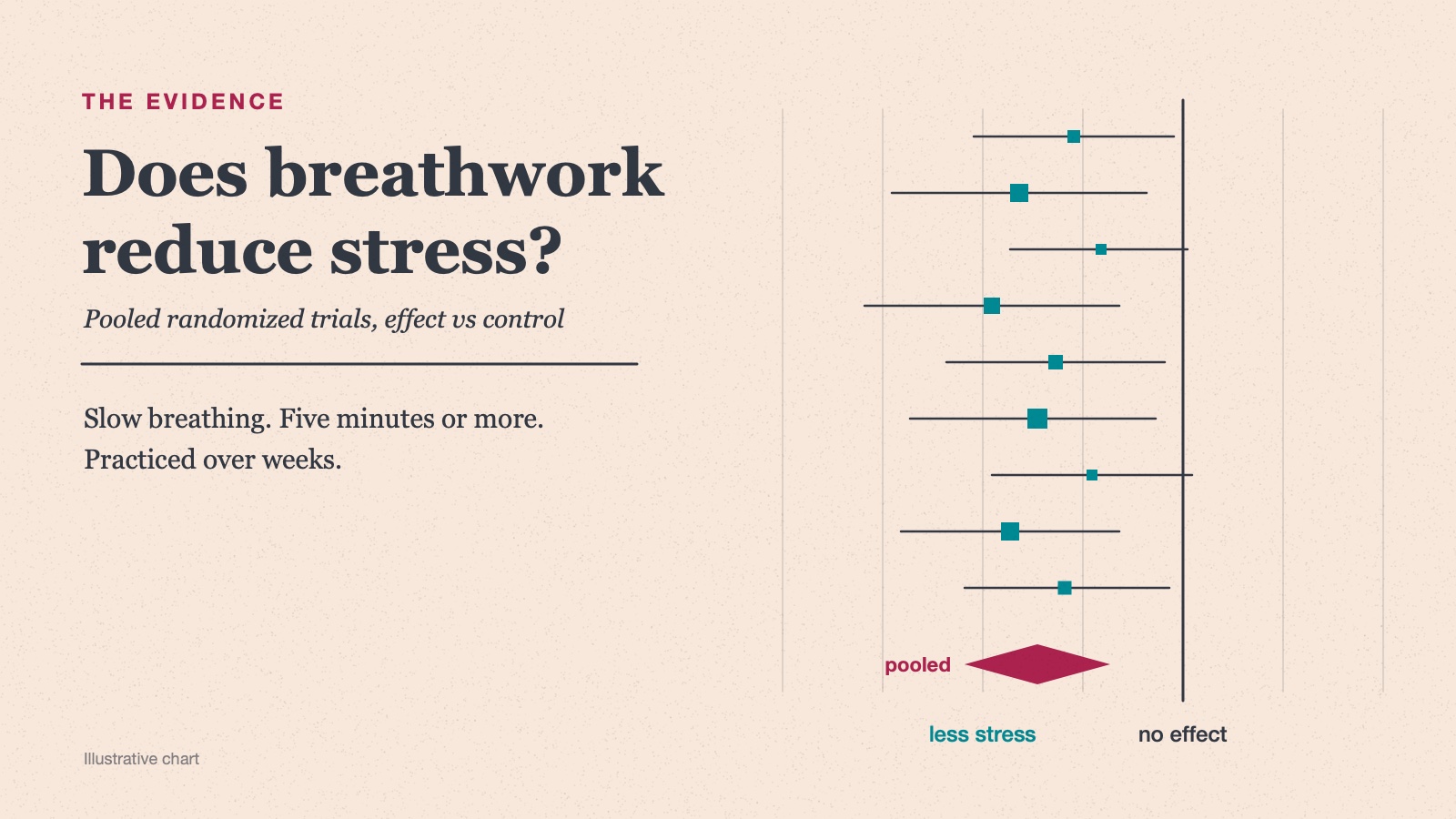
- Repetition beats one-offs. A review of 58 studies found that effective breathing programs for stress included multiple sessions and long-term practice, and avoided sessions shorter than 5 minutes (Bentley et al., 2023).
- Sleep needs a routine. Fifteen minutes of slow breathing every evening for 30 days improved sleep quality (Laborde et al., 2019).
So the goal is not the perfect technique. It is a small practice you will actually do most days.
How long does it take to form a habit?
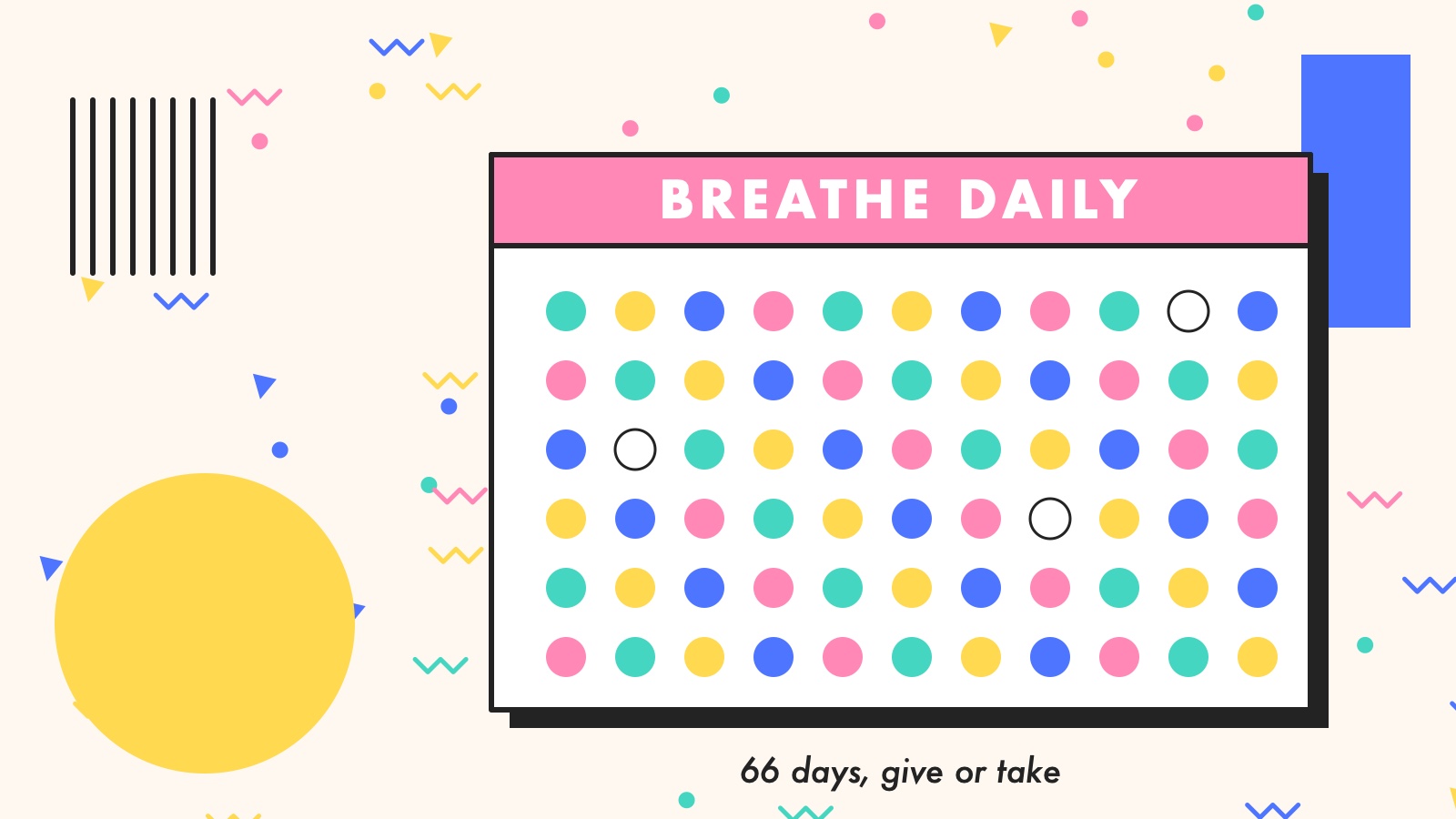
You may have heard "21 days." The research says otherwise. In a well-known study, people chose a new daily health behavior and tracked how automatic it felt. On average it took about 66 days to reach a plateau of automaticity, with huge variation between people (Lally et al., 2010). A 2024 systematic review of 20 studies found median times of 59 to 66 days, with individuals ranging from 4 to 335 days (Singh et al., 2024).
Two encouraging details: missing a day now and then doesn't ruin a habit, and simple behaviors become automatic faster than complex ones. A 5-minute breathing practice is about as simple as it gets.
The science of making a habit stick
Psychologists describe habits as behaviors that become automatic because they are repeated in the same context. The cue (a time, a place, an existing routine) eventually triggers the behavior without much thought (Gardner et al., 2012). That gives you three practical levers:
1. Use an if-then plan
An implementation intention is a specific plan in the form "When X happens, I will do Y." A meta-analysis of many studies found these simple if-then plans had a medium-to-large effect on actually reaching goals (Gollwitzer and Sheeran, 2006).
Examples:
- "When I pour my morning coffee, I will do 5 minutes of breathing before I drink it."
- "When I park at work, I will do three physiological sighs before I get out of the car."
- "When I get into bed, I will do 4 rounds of 4-7-8 breathing."
2. Anchor it to the same context
Same time, same place, same trigger. Habits form through repetition in a stable context (Gardner et al., 2012). Morning coffee, lunch break, after the school run, getting into bed: pick one and stick with it.
3. Make it small
Start smaller than you think you need: 2 minutes. Once that is automatic, grow it to 5, then 10. A habit you do every day at 2 minutes beats a 20-minute plan you skip.
A 4-week plan to build your breathing habit
Week 1: Just show up. 2 minutes a day of slow breathing, 4 seconds in and 6 out, at the same time every day.
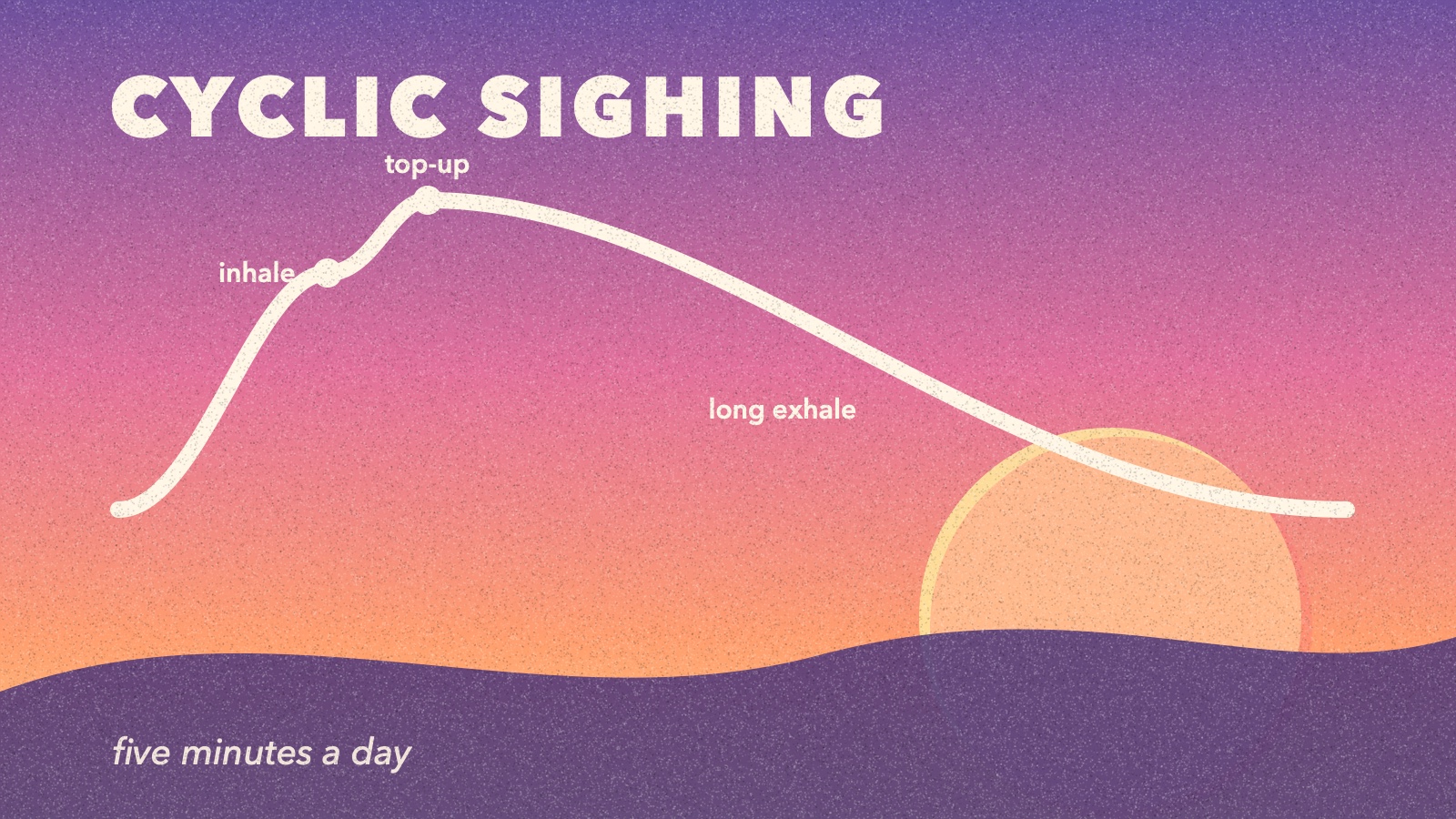
Week 2: Five minutes. Grow to 5 minutes, the minimum length the research favors. Try cyclic sighing or resonance breathing.
Week 3: Add a second cue. Keep your daily 5 minutes, and add a quick reset for stressful moments, such as one to three physiological sighs.
Week 4: Personalize. Try a few techniques and keep what you enjoy: box breathing for focus, long exhales for calm, slow breathing before bed for sleep.
Then keep going. Remember, the research average is around two months before a habit feels automatic.
Do you need streaks and tracking?
Many apps lean on streak counters, badges and notifications. Some people like them. But habit research suggests what really drives automaticity is repetition in a consistent context, not a score. And a missed day breaking a long streak can make people quit altogether.
There is also a privacy side. A 2019 study in The BMJ analyzed top-rated health-related apps and found that 79% shared user data with other companies, including analytics and advertising services (Grundy et al., 2019). A daily breathing practice doesn't need to be logged on someone else's server. For why the numbers are optional, see you don't need a wearable to calm your nervous system.
If you want a reminder, use your phone's own Clock alarm or a repeating calendar event. Then let the habit do the rest.
Common mistakes
Starting too big. A 20-minute plan on day one is a recipe for skipping. Start at 2 minutes.
Practicing "whenever." Without a fixed cue, practice drifts. Use an if-then plan.
Quitting after a missed day. One missed day doesn't undo a habit. Just do the next one.
Changing techniques every day. Pick one main practice for the first few weeks.
The best app for a daily breathing habit: The Breath Interval
A habit app should make the practice easy, not demand your data. The Breath Interval is a top custom breathing app that saves your rhythms, starts a session in a tap and needs no account, so there is nothing between you and your 5 minutes. That makes it one of the best breathing apps for building a daily practice on iPhone and iPad, especially if you want one that doesn't track you.
- One tap to start. Save your daily rhythm and session length, then just press start.
- Grows with you. 2 minutes in week one, 10 minutes later; change the length in seconds.
- Variety without clutter. Save several rhythms, such as morning resonance, a midday sigh and a bedtime 4-7-8.
- Breathing playlists. With Pro, combine your favorite rhythms into one daily routine.
- No streaks, no tracking. No account, no sign-in, no analytics and no third-party services. Your practice stays on your device.
The Breath Interval is free to use, with an optional one-time Pro upgrade and no subscription. Tap the rhythm below to start your first 2-minute session.
Safety notes
Keep breathing practice gentle and stop if you feel dizzy, light-headed or short of breath. Breathing exercises are a wellness practice, not a treatment for any medical or mental health condition. If you are pregnant, or have a heart, lung or other medical condition, or an anxiety or panic disorder, check with a qualified healthcare provider before starting a new breathing practice.