Box breathing is one of the most popular breathing exercises in the world, and one of the easiest to remember: four equal parts, four equal counts. You breathe in, hold, breathe out and hold again, picturing each step as one side of a square.
It is also called square breathing, four-square breathing or 4-4-4-4 breathing. It is taught to athletes, first responders, students and anyone who wants a quick way to steady their mind under pressure. This guide covers how to do box breathing step by step, what the newest research says about box breathing for stress and anxiety, when it may not be the right choice, and how to practice it with a timer that keeps the count for you.
What is box breathing?
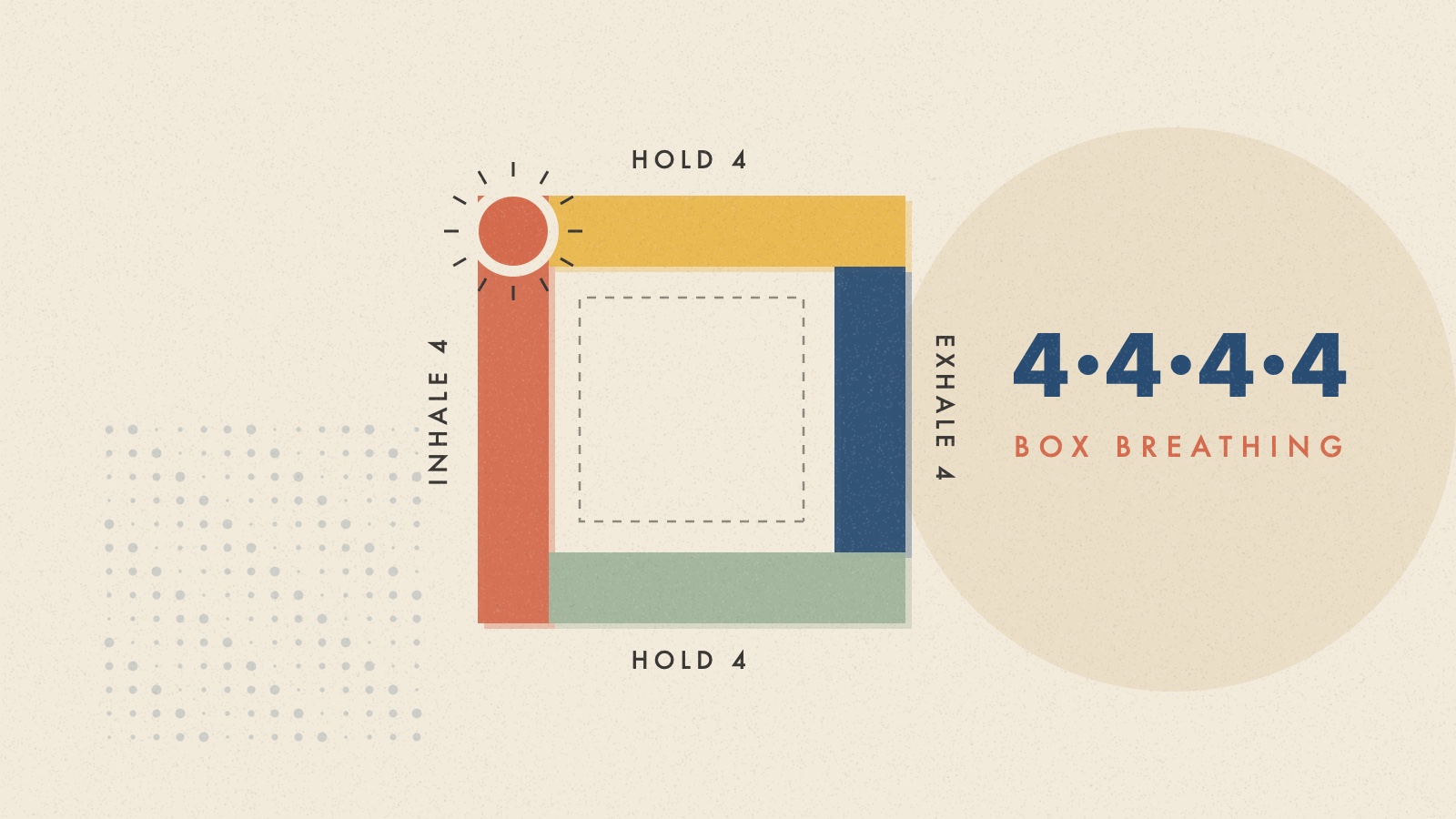
Box breathing is a form of paced breathing: instead of letting your breath run on autopilot, you set the length of each part on purpose. A classic box has four equal phases:
- Inhale through your nose for 4 seconds
- Hold with full lungs for 4 seconds
- Exhale slowly for 4 seconds
- Hold with empty lungs for 4 seconds
One full box takes 16 seconds, which works out to just under 4 breaths per minute. Most adults breathe around 12 to 20 times a minute at rest, so even a few rounds of box breathing slow you down a lot.
The 4-second count is a starting point, not a rule. What makes it a box is that all four sides are equal. A 3-3-3-3 box and a 6-6-6-6 box are both box breathing.
How to do box breathing, step by step
1. Get settled. Sit upright with your feet flat on the floor, or lie on your back. Rest your hands in your lap or on your belly. Close your eyes or soften your gaze toward the floor.
2. Empty your lungs. Breathe out gently until your lungs feel comfortably empty. This gives you a clean starting point.
3. Inhale for 4. Breathe in slowly through your nose for a count of four. Let your belly rise first, then your chest. This is diaphragmatic breathing, sometimes called belly breathing.
4. Hold for 4. Pause at the top for a count of four. Keep your jaw, throat and shoulders relaxed. The hold should feel like a soft pause, not like clamping your breath shut.
5. Exhale for 4. Breathe out slowly and evenly for a count of four, through your nose or slightly parted lips. Spread the out-breath across the whole count instead of letting it all go at once.
6. Hold for 4. Pause with empty lungs for a count of four. This bottom hold is often the hardest part. Stay loose and let it be a moment of stillness.
7. Repeat. That is one box. Go straight into the next inhale and keep going for about 5 minutes.
It helps to picture a square while you breathe: up one side on the inhale, across the top on the hold, down the other side on the exhale, and across the bottom on the last hold.
Why box breathing can help with stress and anxiety
When you are stressed, your sympathetic nervous system, the fight-or-flight response, speeds up your heart rate and your breathing. Fast, shallow breathing can keep that alarm switched on. Slow breathing works in the other direction.
Slow, controlled breathing is closely tied to the parasympathetic nervous system, the rest-and-digest side of your nervous system, and much of its calming influence on the heart runs through the vagus nerve. (Curious what breathing can and can't do for it? See vagus nerve breathing: hype vs science.) Researchers often track this with heart rate variability (HRV), the natural variation in time between heartbeats.
Box breathing also gives your attention a clear, simple job. Counting four equal sides leaves less room for racing thoughts, which makes it a practical grounding technique before a presentation, an exam, a competition or a difficult conversation.
What the research says
Unlike many breathing patterns, box breathing has now been tested directly in randomized controlled trials.
- A systematic review of box breathing trials. A 2026 review in Applied Psychophysiology and Biofeedback looked only at randomized trials of the equal-phase inhale, hold, exhale, hold pattern and found eight. Several showed short-term benefits for perceived stress, anxiety and mood. Physical effects were mixed: some studies saw a slower breathing rate, others changes in heart rate or HRV. The authors call the evidence promising but limited, and ask for larger, longer trials (Dujawara et al., 2026).
- Box breathing before a stressful task. In a 2026 randomized trial, 66 people did normal breathing, box breathing or a long-exhale technique before a standardized social stress test. Both box breathing and the long-exhale technique reduced the rise in heart rate, state anxiety and a saliva stress marker (alpha-amylase) compared with normal breathing. HRV and cortisol did not change (McAllister et al., 2026).
- Box breathing in real life. In a 2026 pilot study, 47 university students used a one-minute breathing exercise in real stressful moments. Both box breathing and cyclic sighing were linked to bigger drops in anxiety than doing nothing (Riedl et al., 2026).
- Daily practice and mood. In a 2023 Stanford trial, people practiced box breathing, another breathwork technique or mindfulness meditation for 5 minutes a day for a month. Breathwork, especially an exhale-focused technique called cyclic sighing, improved mood and lowered breathing rate more than meditation did (Balban et al., 2023). Read more in what the Stanford cyclic sighing study found.
- Breathwork in general. A 2023 meta-analysis of randomized trials found breathwork was associated with lower stress, anxiety and depressive symptoms than control conditions (Fincham et al., 2023). For the bigger picture, see does breathwork reduce stress and anxiety?. A 2022 meta-analysis of 223 studies found that slow breathing increases vagally mediated HRV (Laborde et al., 2022).
The takeaway: box breathing looks like a useful short-term tool for stress and anxiety, backed by a growing body of research. It is a wellness practice, not a treatment for an anxiety disorder.
When box breathing may not be the best choice
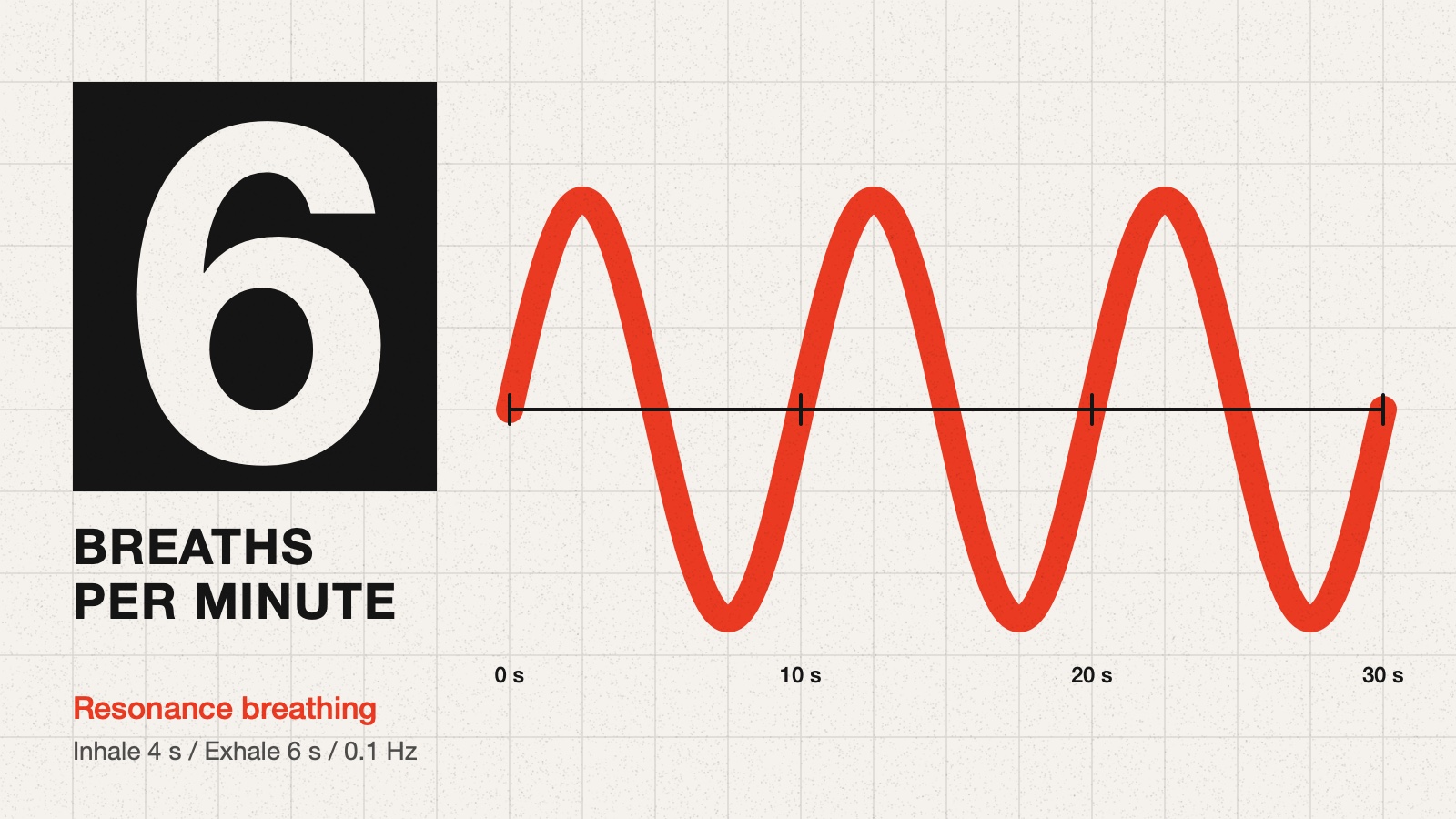
Box breathing is not the right tool for every moment. In a 2025 crossover study, 40 active students tried different recovery breathing after hard interval training. Box breathing led to a higher heart rate and higher perceived effort than slow breathing at 6 breaths a minute, and the authors suggest box breathing may add stress right after intense exercise (Kasap and Aydin, 2025).
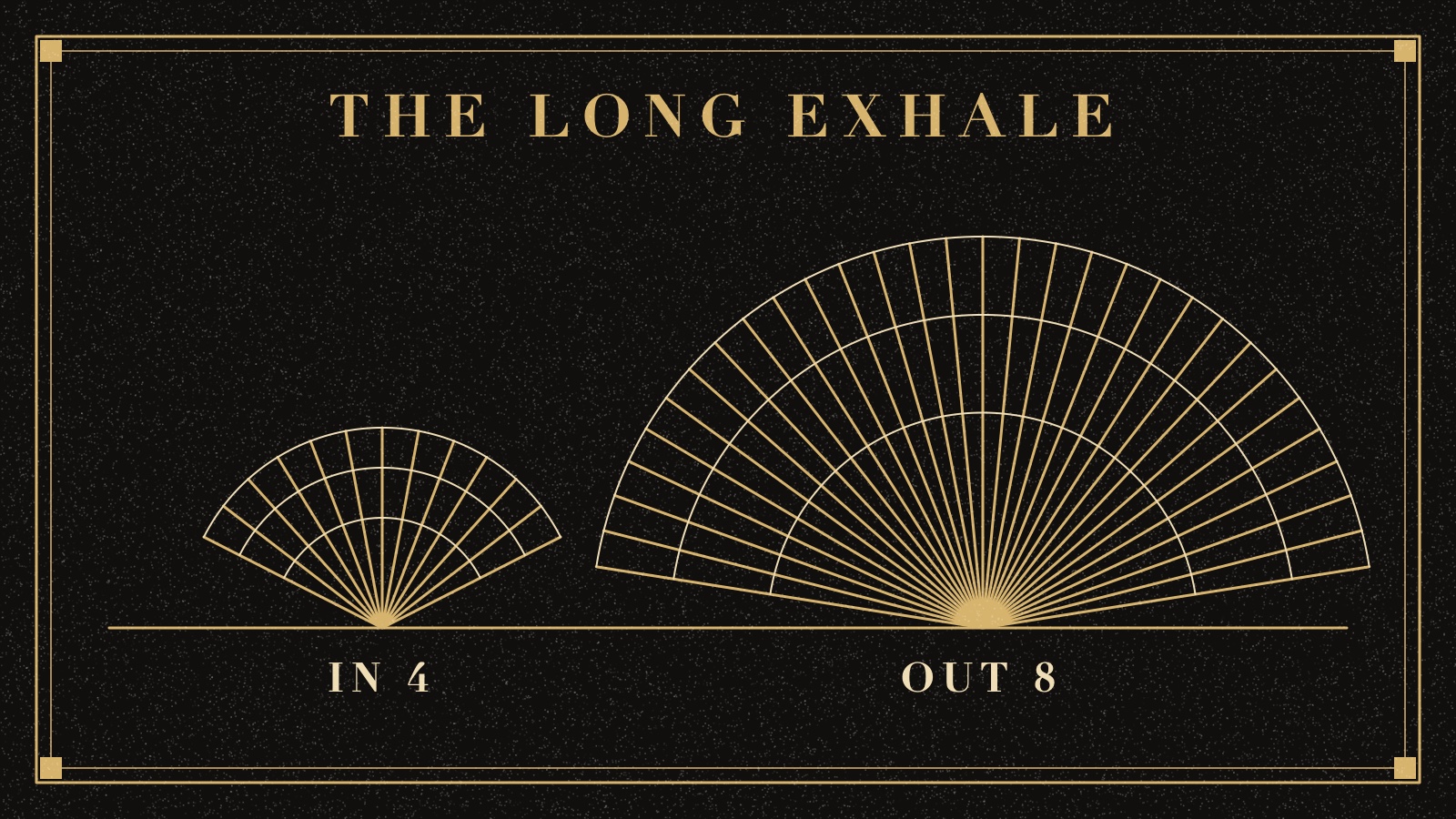
So if you are out of breath, recovering from a workout, or the holds make you feel more panicky rather than less, choose a gentler pattern. Equal breathing (for example 5 in, 5 out, no holds) or triangle breathing, which has only one hold, are good alternatives. So are resonance breathing and long-exhale breathing, which have no holds at all.
How long and how often to practice
Start with about 5 minutes, once or twice a day. A 2023 systematic review of breathing practices for stress and anxiety found that effective programs avoided sessions shorter than 5 minutes and included repeated, long-term practice (Bentley et al., 2023).
Good moments to practice box breathing:
- Before something stressful, like a presentation, an interview or an exam
- During a work break, to reset your focus
- Before bed, as part of winding down (see breathing exercises for sleep)
- As a daily habit, even on calm days, so it feels familiar when you really need it (how to build the habit)
Box breathing variations
- Shorter box (3-3-3-3). If 4 seconds feels rushed or the holds feel strained, drop to 3. Some beginners start at 2-2-2-2.
- Longer box (5-5-5-5 or 6-6-6-6). Build up one second at a time, staying at each level for several sessions.
- Shorter bottom hold (4-4-4-2). If the empty-lung hold is the hard part, shorten just that side and build it back up.
- No holds at all. If holds make you uncomfortable, switch to equal breathing until they feel easier.
A good rule: you should finish a session breathing as smoothly as you started. If you need a big gasp after each box, shorten the count.
Box breathing vs triangle breathing vs 4-7-8
- Box breathing (4-4-4-4): inhale, hold, exhale, hold. Four equal phases, under 4 breaths a minute. Even and steady.
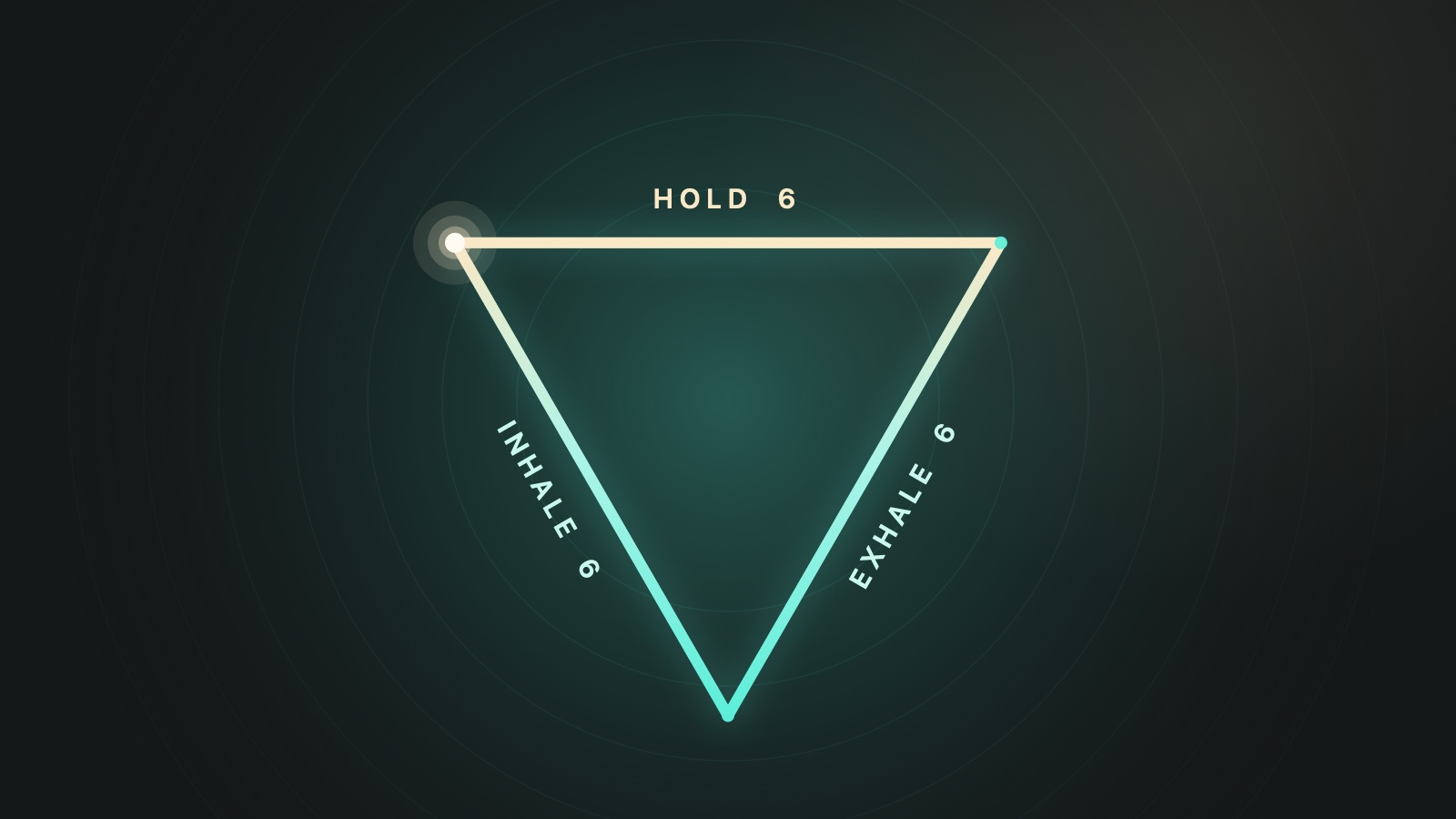
- Triangle breathing (4-4-4): inhale, hold, exhale. One fewer hold, so it is often easier for beginners and anxious moments.
- 4-7-8 breathing: a short inhale, a long hold and an even longer exhale. Popular for winding down before sleep.
Common mistakes
Forcing the holds. A hold should feel like a pause, not a struggle. If you are straining, shorten the count.
Breathing too big. Box breathing is about slow breaths, not huge ones. Over-filling your lungs can leave you light-headed.
Tensing up during the hold. Check your throat, jaw and shoulders and let them soften.
Rushing the exhale. Stretch the out-breath evenly across the full count instead of letting it all go at once.
Losing count. When your mind wanders, your count speeds up. A timer with audio cues keeps the rhythm honest.
The best app for box breathing: The Breath Interval
If you are looking for the best box breathing app, look for one that lets you set every side of the box yourself. The Breath Interval is a top custom breathing app built for exactly that. Most breathing apps hand you a fixed routine and a narrator. The Breath Interval hands you the controls, which makes it one of the most flexible breath timer apps for iPhone and iPad.
- Exact second counts. Set the inhale, both holds and the exhale to the second, so a 4-4-4-4 box is exactly 4-4-4-4, and moving up to 5-5-5-5 takes one tap.
- Chimes, not narration. A distinct chime marks the inhale, the hold and the exhale, so you can close your eyes and follow the sound instead of a voice.
- Any pattern, not just boxes. Build box breathing, triangle breathing, 4-7-8, equal breathing or your own rhythm. See the breathing techniques you can build.
- Breathing playlists. With Pro, chain rhythms together, for example an equal-breathing warm-up, a box breathing block and a slow wind-down, played back to back.
- Private and offline. No account, no sign-in, no analytics, and no wearable needed (here is why). It keeps time with your screen locked.
The Breath Interval is free to use, with an optional one-time Pro upgrade and no subscription.
Safety notes
Box breathing is gentle, but stop and breathe normally if you feel dizzy, light-headed, short of breath or unwell. Never practice breath holds while driving, in water, or anywhere a loss of focus could be dangerous. If you are pregnant, or have a heart, lung or other medical condition, or an anxiety or panic disorder, check with a qualified healthcare provider before starting a new breathing practice.