Triangle breathing is a simple breathing exercise for anxiety that you can do anywhere, with no equipment and no experience. You breathe in, hold, and breathe out for the same count, picturing each part of the breath as one side of a triangle. Three sides, three steps, one steady rhythm.
It is sometimes called three-part breathing, the triangle breath or 6-6-6 breathing. Because it has one fewer hold than box breathing, many people find it easier to start with, especially when they already feel anxious or short of breath. This guide covers how to do triangle breathing step by step, why slow breathing can calm an anxious nervous system, and what the research actually says.
What is triangle breathing?
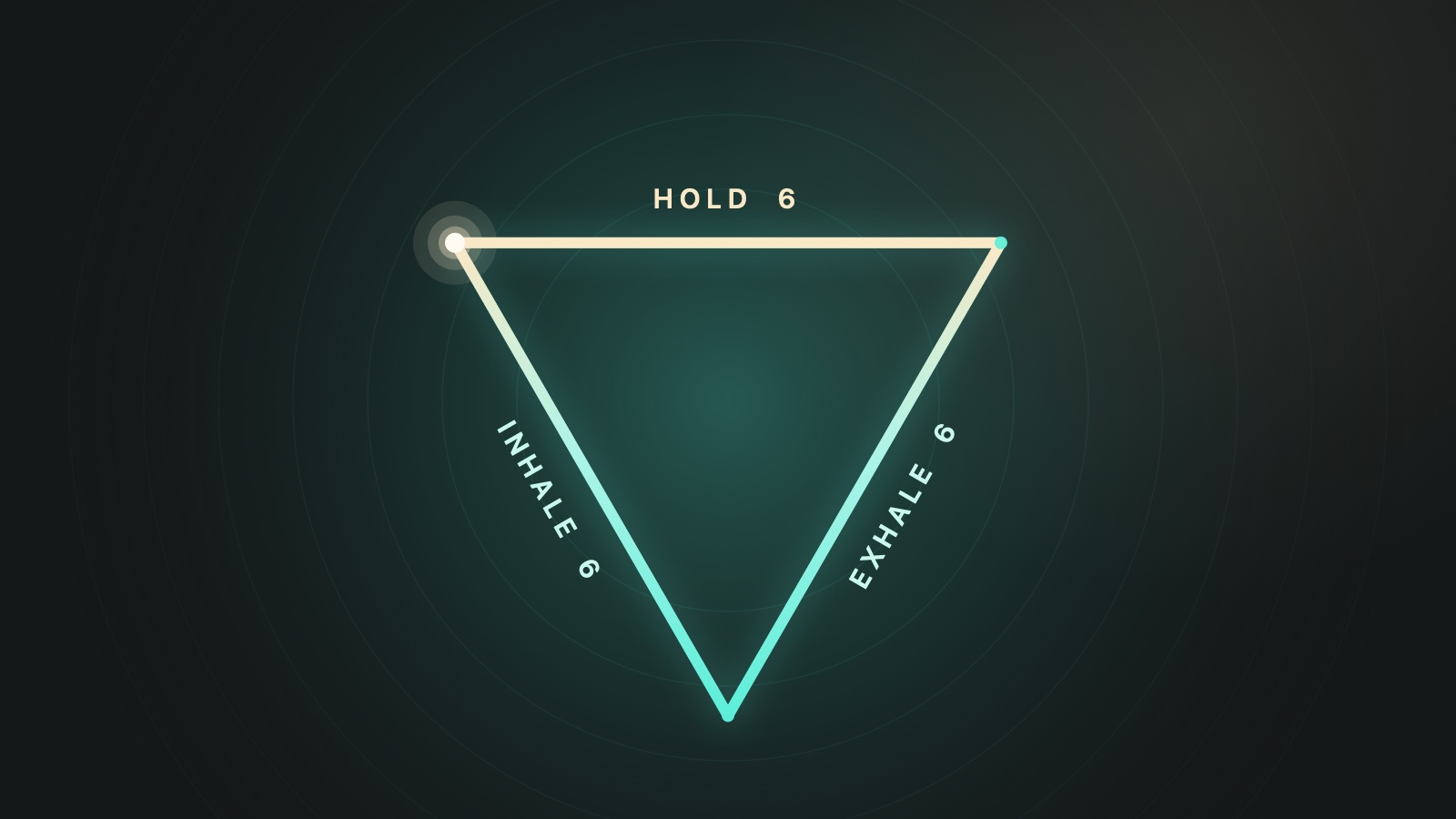
Triangle breathing is a form of paced breathing: instead of letting your breath run on autopilot, you set the length of each part on purpose. The classic triangle has three equal sides:
- Inhale through your nose for 6 seconds
- Hold your breath gently for 6 seconds
- Exhale slowly for 6 seconds
One full triangle takes 18 seconds, which works out to about 3 breaths per minute. Most adults breathe around 12 to 20 times a minute at rest, so a few minutes of triangle breathing slows you down a lot.
You will see a few versions online. Some put the hold after the exhale instead of after the inhale. Others lengthen the exhale, for example 6-6-8. They all share the same idea: a slow, even, three-part rhythm that gives your mind one simple thing to follow.
How to do triangle breathing, step by step
1. Get settled. Sit upright with your feet flat on the floor, or lie on your back. Rest one hand on your chest and one on your belly. Close your eyes or lower your gaze.
2. Breathe out fully. Let your breath go gently until your lungs feel comfortably empty. This gives you a clean start.
3. Inhale for 6. Breathe in slowly through your nose for a count of six. Let your belly rise first, under your lower hand, and keep your chest and shoulders fairly still. This is diaphragmatic breathing, sometimes called belly breathing.
4. Hold for 6. Pause for a count of six. Keep your jaw, throat and shoulders soft. The hold should feel like a calm pause, not like clamping your breath shut.
5. Exhale for 6. Breathe out slowly through your nose or through slightly parted lips for a count of six. Spread the out-breath evenly across the whole count.
6. Repeat. That is one triangle. Go straight into the next inhale and keep going for about 5 minutes.
It helps to picture a triangle while you breathe: up one side on the inhale, across the top on the hold, and down the last side on the exhale. Some people trace the shape with a finger on their leg.
Why triangle breathing can help with anxiety
When you feel anxious, your sympathetic nervous system, the fight-or-flight response, speeds up your heart and your breathing. Fast, shallow breathing can in turn keep the anxious feeling going. Slow breathing works in the other direction.
Breathing slowly, and especially breathing out slowly, is closely tied to the parasympathetic nervous system, the rest-and-digest side of your nervous system. Much of that calming influence on the heart runs through the vagus nerve. (Curious what breathing can and can't do for it? See vagus nerve breathing: hype vs science.) A common way researchers measure it is heart rate variability (HRV), the natural variation in time between heartbeats. Higher vagally mediated HRV is generally read as a sign of a calmer, more flexible nervous system.
There is also a simpler reason triangle breathing helps: it gives your attention a job. Counting to six and picturing a shape leaves less room for racing thoughts. That makes it a useful grounding technique when worry starts to spiral.
What the research says
No study we know of has tested "triangle breathing" by that name. But it is a slow, paced breathing pattern, and that broader kind of breathing has been studied a lot.
- Breathwork and stress, anxiety and depression. A 2023 meta-analysis pooled randomized controlled trials of breathwork. Across 12 trials with 785 adults, breathwork was associated with lower self-reported stress than control conditions, with a small-to-medium effect. Analyses of anxiety (20 trials) and depressive symptoms (18 trials) showed similar effects (Fincham et al., 2023). For the bigger picture, see does breathwork reduce stress and anxiety?.
- What makes breathing practices work. A 2023 systematic review of 58 studies found that 54 of 72 breathing interventions reduced stress or anxiety. The effective ones avoided fast-only breathing and sessions shorter than 5 minutes, and included multiple sessions and long-term practice (Bentley et al., 2023).
- Slow breathing and heart rate variability. A 2022 meta-analysis of 223 studies found that voluntary slow breathing increased vagally mediated HRV during practice, right after a single session, and after multi-session programs (Laborde et al., 2022).
- Even one session. In a 2021 study, a single session of deep, slow breathing increased a vagal measure of HRV and reduced state anxiety in both younger and older adults (Magnon et al., 2021).
- The out-breath matters. In a 2023 Stanford trial, people practiced breathwork for 5 minutes a day for a month. Breathwork, especially an exhale-focused technique, improved mood and lowered breathing rate more than mindfulness meditation did (Balban et al., 2023). Read more in what the Stanford cyclic sighing study found.
A standard 6-6-6 triangle, at about 3 breaths a minute, sits well inside the slow range these studies looked at. Reviews of slow breathing note effects on the respiratory, cardiovascular and autonomic nervous systems (Russo et al., 2017), but the research is still developing. Breathing exercises are a wellness practice, not a treatment for an anxiety disorder.
Triangle breathing variations
Once the basic 6-6-6 rhythm feels easy, you can adjust it.
- Shorter count (4-4-4). If 6 seconds feels long or the hold is uncomfortable, drop to 4. It is still triangle breathing.
- Longer exhale (6-6-8). Stretching the out-breath is a popular way to make the pattern more calming, since a long exhale is the part most associated with slowing down. Learn why in why longer exhales calm you down.
- Hold at the bottom (6-6-6, inhale, exhale, hold). Some people prefer to pause with empty lungs instead of full ones. Try both and keep whichever feels calmer.
- Slower triangle (7-7-7 or 8-8-8). Build up one second at a time over days or weeks. Never force it.
A good rule: you should finish a session breathing as smoothly as you started. If you need a big gasp of air after each triangle, shorten the count.
Triangle breathing vs box breathing
Triangle breathing and box breathing are close cousins. Both use equal counts. The difference is the number of sides:
- Triangle breathing (6-6-6): inhale, hold, exhale. Three phases, about 3 breaths a minute.
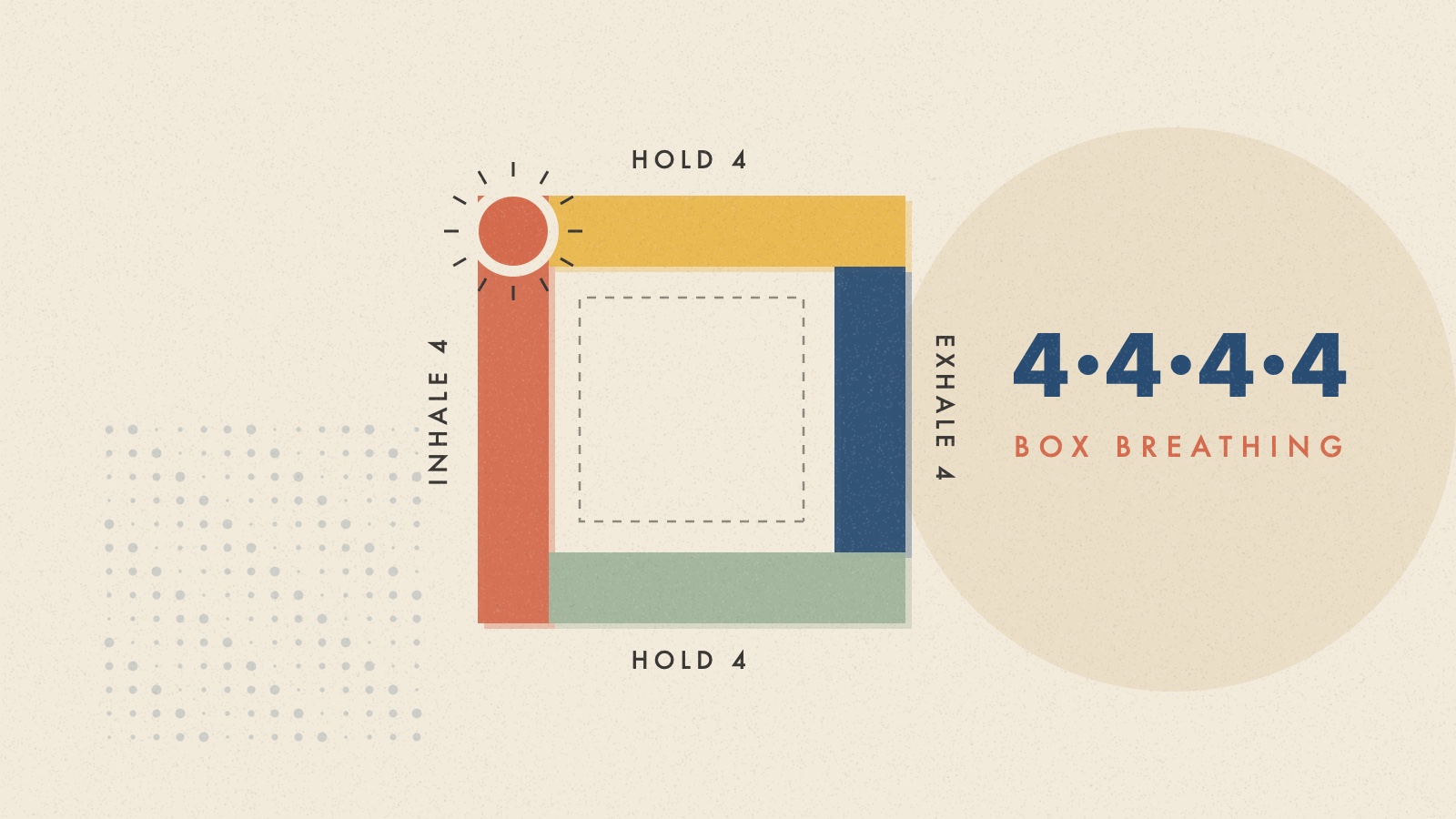
- Box breathing (4-4-4-4): inhale, hold, exhale, hold. Four phases, under 4 breaths a minute.
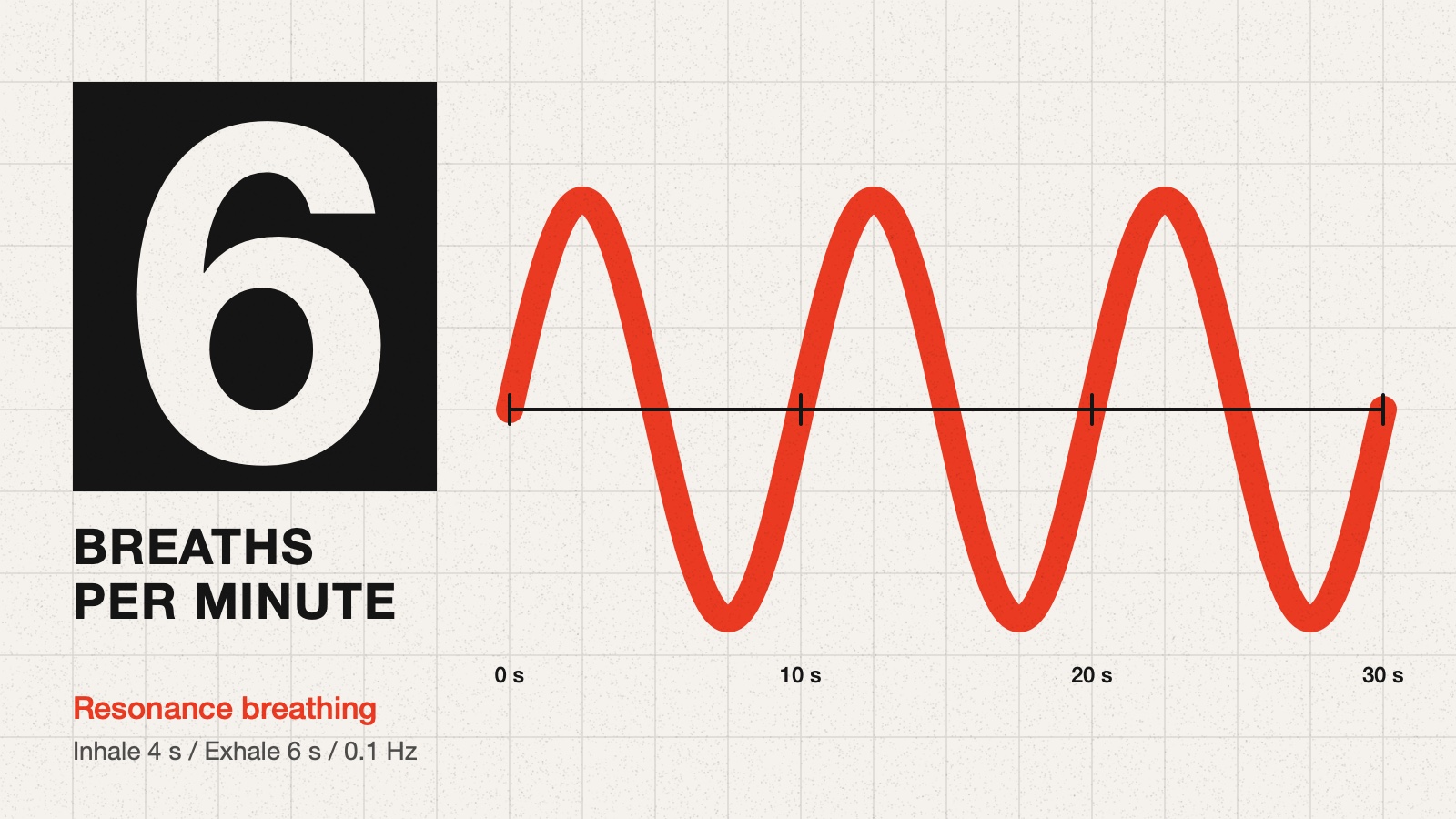
Because it skips the second hold, triangle breathing is often the gentler choice for beginners, or for moments when you already feel anxious and holding your breath with empty lungs feels like too much. If you would rather avoid holds altogether, try equal breathing (just inhale and exhale for the same count) or resonance breathing, a smooth rhythm of about 6 breaths a minute with no holds.
When to use triangle breathing
- When anxiety starts to build, before it turns into a spiral
- Before a stressful event, like a presentation, an exam or a hard conversation
- At bedtime, to wind down before sleep (see breathing exercises for sleep)
- During a work break, to reset your focus
- As a daily habit, for about 5 minutes, even on calm days (how to build the habit)
That last one matters more than it sounds. Breathing techniques tend to work best when you have practiced them while calm, so they feel familiar when you really need them.
How to practice triangle breathing with The Breath Interval
Counting in your head works, but when you are anxious your count tends to speed up. A timer keeps the rhythm honest.
In The Breath Interval, tap + Breath to add three phases, set each one to 6 seconds, and start. Three phases make a smooth, looping triangle. A distinct chime marks the inhale, the hold and the exhale, so you can close your eyes and just follow the sound. You can change any side of the triangle to the exact second, which makes it easy to try a 6-6-8 longer exhale or build up to 8-8-8 over time. See the breathing techniques you can build for the shape of other classic patterns.
The app is free, needs no account and works offline. No wearable needed either; here is why you don't need one to calm your nervous system.
Safety notes
Triangle breathing is gentle, but stop and breathe normally if you feel dizzy, light-headed, short of breath or unwell. For some people, focusing on the breath or holding it can make anxiety worse at first. If that happens, skip the hold and simply breathe in and out slowly. Never practice breath holds while driving, in water, or anywhere a loss of focus could be dangerous.
If you live with an anxiety disorder, panic attacks, or a heart, lung or other medical condition, or if you are pregnant, talk with a qualified healthcare provider before starting a new breathing practice. Breathing exercises can support your well-being, but they are not a replacement for professional care.