Most of the time you don't think about whether air goes in through your nose or your mouth. But the route matters. Your nose is not just an air hole. It warms, humidifies and filters the air, it adds a gas called nitric oxide, and, as neuroscientists have discovered, nasal breathing even helps synchronize activity in the parts of your brain involved in memory and emotion.
This guide covers the science of nose breathing vs mouth breathing, what nasal breathing does for your body and brain, the truth about the mouth taping trend, and simple exercises to make nose breathing your default.
Why breathe through your nose?
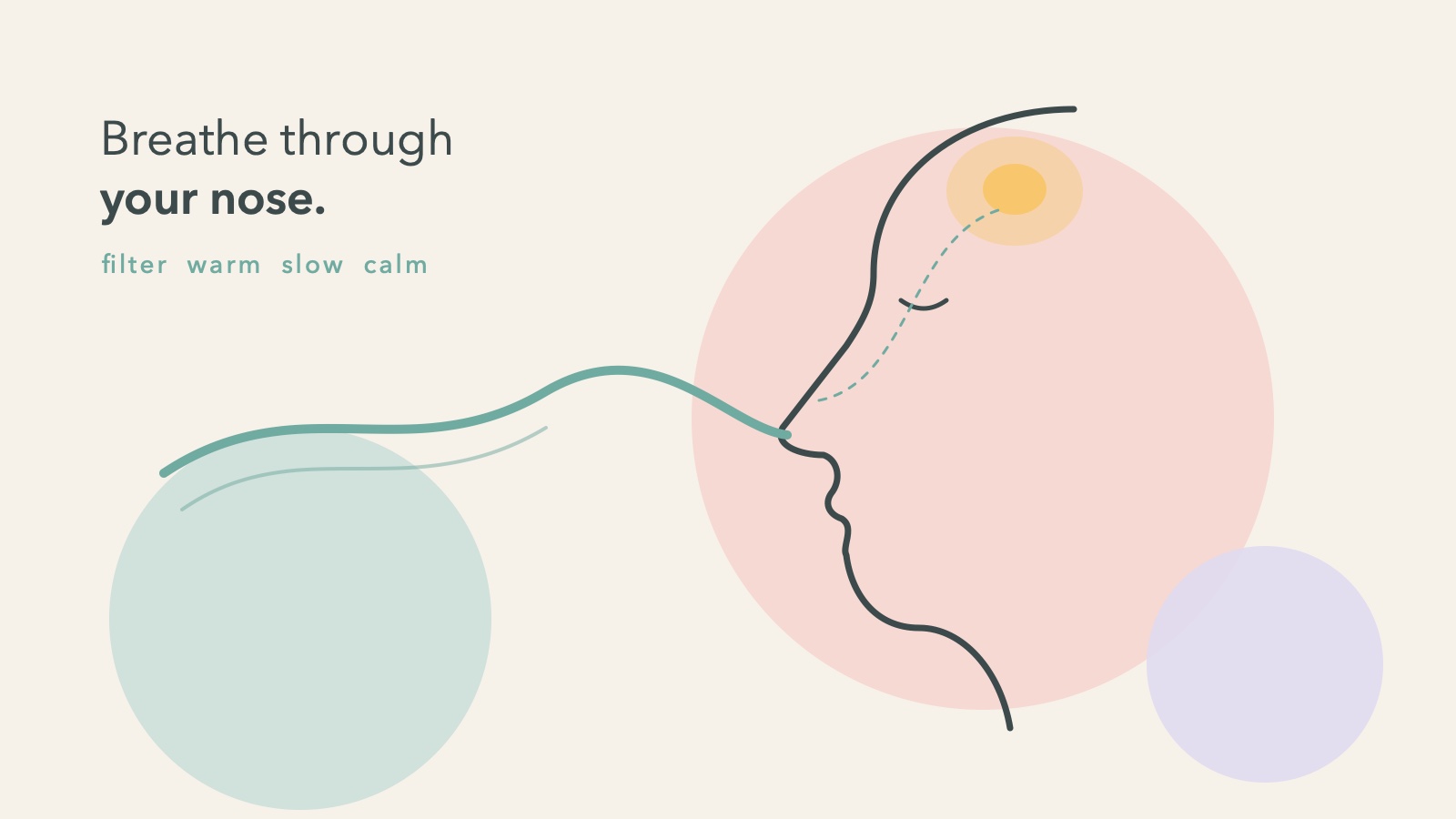
Your nose does several jobs your mouth can't:
- It conditions the air. Nasal passages warm and humidify incoming air before it reaches your lungs.
- It filters. Nasal hairs and mucus trap dust, pollen and other particles.
- It slows you down. The nose offers more resistance than the mouth, which naturally encourages slower, deeper breathing.
- It adds nitric oxide. The sinuses produce nitric oxide (NO), a gas that is carried into the lungs with each nasal breath.
- It talks to your brain. Airflow through the nose drives rhythms in the brain's smell and memory centers.
Nasal breathing and nitric oxide
In 1995, researchers in Sweden reported that the paranasal sinuses produce nitric oxide in very high concentrations. They suggested it helps keep the sinuses sterile, since nitric oxide has well-known antibacterial effects (Lundberg et al., 1995). When you breathe through your nose, some of that nitric oxide travels with the air into your lungs. Mouth breathing bypasses it.
Here is a fun follow-up: humming dramatically boosts it. In a 2002 study, nasal nitric oxide increased 15-fold during humming compared with a quiet exhale, because the vibrating airflow ventilates the sinuses (Weitzberg and Lundberg, 2002). That is one reason humming breaths, sometimes called bee breath or bhramari, show up in many breathing traditions.
How nasal breathing affects your brain
This is where nose breathing gets surprising.
In a 2016 study, researchers recorded brain activity directly from electrodes in patients being evaluated for epilepsy surgery. They found that natural nasal breathing synchronizes electrical activity in the brain's smell cortex and in limbic areas including the amygdala (emotion) and hippocampus (memory). That activity peaked during inhalation and faded when breathing switched from the nose to the mouth. In matching experiments, people judged fearful faces faster and remembered images better when they saw them during a nasal inhale rather than an exhale (Zelano et al., 2016).
A 2018 study went further. People learned a set of smells, then rested for an hour breathing only through their nose or only through their mouth. Memory for the smells was significantly better after nasal breathing during that rest (Arshamian et al., 2018).
Researchers who review slow breathing have proposed that receptors in the nose that sense airflow may be one route by which slow breathing calms the brain (Zaccaro et al., 2018).
Is mouth breathing bad for you?
Mouth breathing is not dangerous in itself, and sometimes it is necessary, during hard exercise or when your nose is blocked. But habitual mouth breathing skips the nose's filtering, warming and nitric oxide, and tends to go with faster, shallower breathing. Chronic mouth breathing, especially during sleep, can also be a sign of nasal blockage or a sleep-related breathing problem worth checking with a doctor.
What about mouth taping?
Taping your mouth shut at night has become a social media trend. A 2025 systematic review looked at the evidence: 10 studies with a total of 213 patients. Two studies showed improvements in sleep apnea markers, but others found no difference, and the authors warn of a potentially serious risk, including suffocation if the nose is blocked (Rhee et al., 2025).
The takeaway: don't tape your mouth to fix a breathing problem. If you snore, wake up with a dry mouth or feel unrested, see a healthcare provider about your nose and your sleep. During the day, nasal breathing exercises are a safer place to start.
How to practice nasal breathing, step by step
1. Close your mouth gently. Lips together, teeth slightly apart, tongue resting on the roof of your mouth.
2. Breathe in through your nose for 4 seconds. Let your belly rise. See our guide to diaphragmatic breathing.
3. Breathe out through your nose for 6 seconds. Or try a humming exhale: keep your lips closed and hum softly as you breathe out.
4. Keep it quiet. Nasal breathing at rest should be almost silent. If it is loud, slow down.
5. Practice for 5 minutes. Then check in with your breathing throughout the day: is your mouth open?
Nasal breathing exercises to try
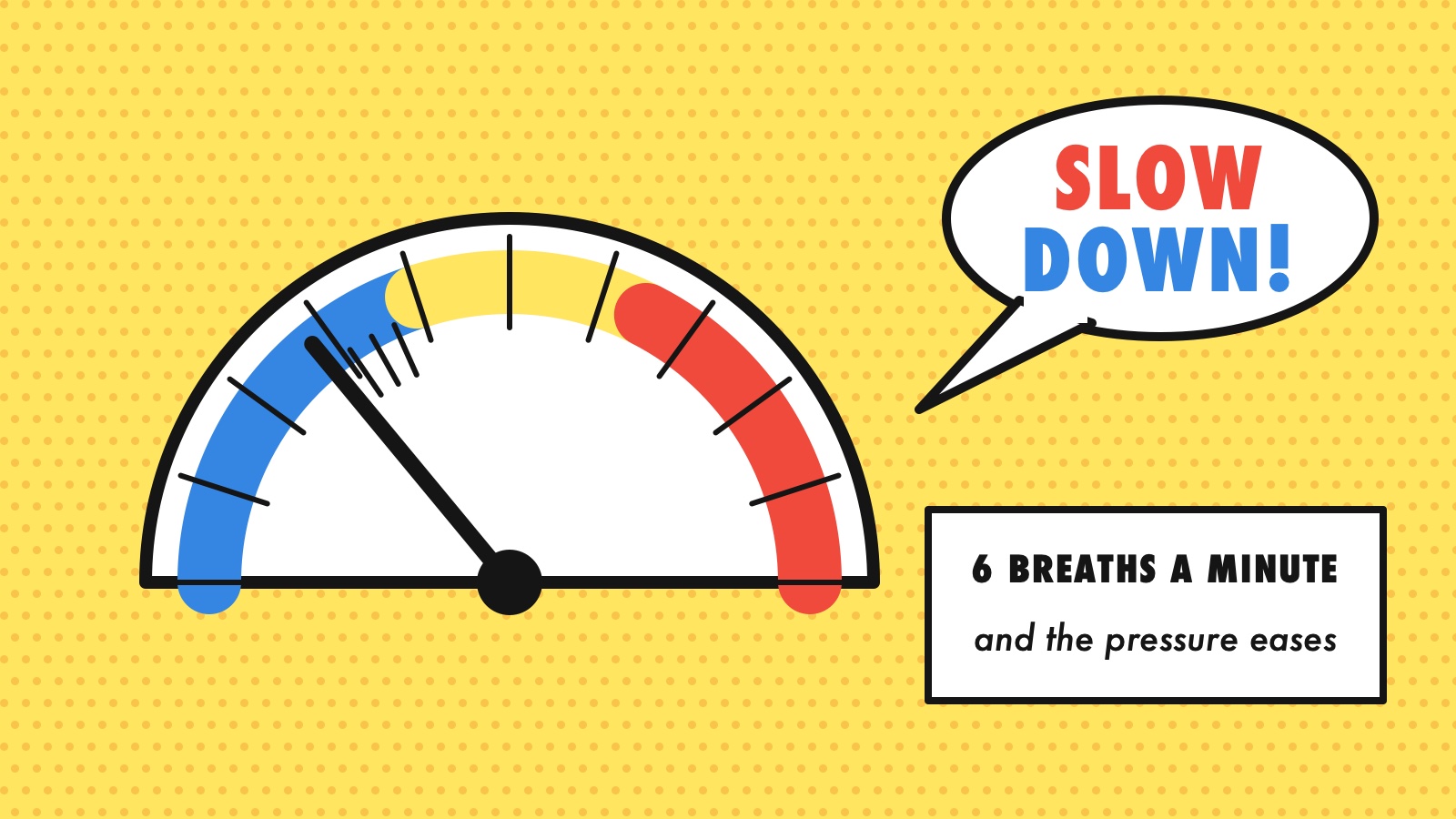
- Slow nasal breathing: in and out through the nose at about 6 breaths a minute, such as 4 in and 6 out. This is close to resonance breathing.
- Humming breath: inhale through the nose, then hum on a long exhale. Great for winding down and for boosting nasal nitric oxide.
- Long nasal exhale: a slow exhale through the nose, longer than the inhale. See why longer exhales calm you down.
- Nasal box or triangle breathing: practice box breathing or triangle breathing entirely through your nose.
Common mistakes
Forcing it with a blocked nose. If you can't breathe comfortably through your nose, don't force it. Get the blockage checked.
Sniffing hard. Nasal breaths should be smooth and soft, not sharp sniffs.
Clenching your jaw. Keep your lips together but your jaw relaxed.
Taping your mouth without advice. See the safety points above.
The best app for nasal breathing practice: The Breath Interval
Building a nasal breathing habit means practicing a slow, quiet rhythm until it feels normal. The Breath Interval is a top custom breathing app that lets you name every phase and set it to the exact second, so you can build a nasal breath, a humming exhale or a long nasal exhale and follow it by chime. That makes it one of the most flexible breathing apps for nose breathing on iPhone and iPad.
- Name your phases. "Nose inhale" and "Hum out" instead of generic labels.
- Chimes, not narration. Close your eyes and keep your attention on your nose.
- Any rhythm. 4-6, 5-5, humming breath, or nasal box breathing.
- Breathing playlists. With Pro, chain slow nasal breathing into a humming wind-down.
- Private by design. No account, no sign-in, no analytics, and it works offline.
The Breath Interval is free to use, with an optional one-time Pro upgrade and no subscription. Tap the rhythm below to open a humming nasal breath in the app.
Safety notes
If your nose is often blocked, you snore loudly, stop breathing during sleep, or wake up tired, talk with a healthcare provider; these can be signs of a nasal or sleep condition. Do not tape your mouth closed, especially with nasal congestion, a cold, allergies, or after drinking alcohol or taking sedatives. Stop any breathing exercise if you feel dizzy, light-headed or short of breath.