Lying in bed with a racing mind is one of the most frustrating feelings there is. You are tired, but your body is still in go mode. Slow breathing before bed is one of the simplest ways to change that, and it has more research behind it than most sleep hacks.
This guide covers breathing exercises for sleep, including the popular 4-7-8 breathing method, why slow breathing helps your body switch off, what the studies show, and a simple bedtime routine you can start tonight.
Why breathing helps you fall asleep
To fall asleep, your nervous system has to shift from the sympathetic state (alert, fight-or-flight) to the parasympathetic state (rest-and-digest). Researchers who study insomnia describe it partly as a problem of hyperarousal: too much sympathetic activity and too little parasympathetic activity at bedtime (Jerath et al., 2019).
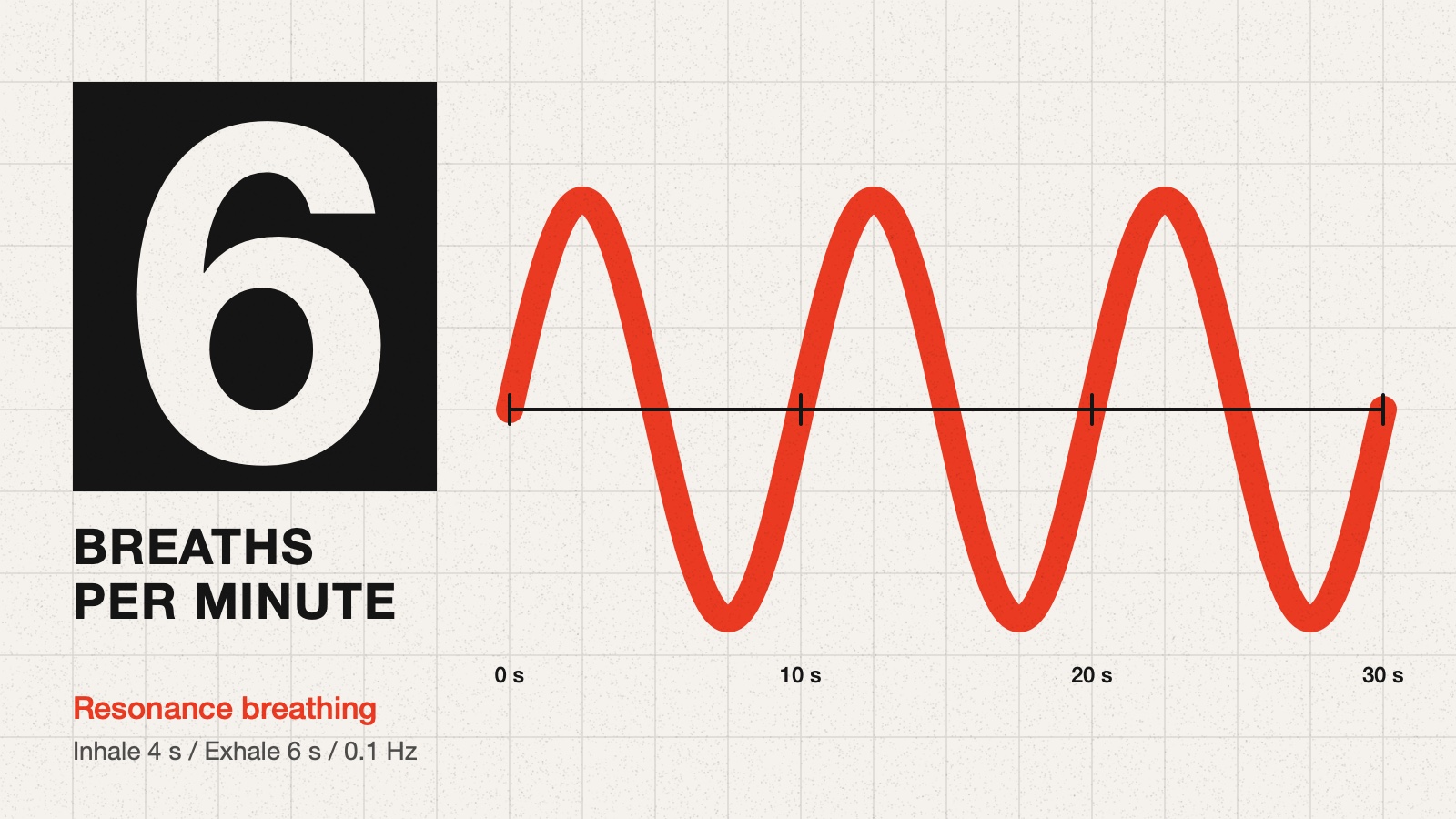
Slow breathing pushes directly on that switch. Breathing at about 6 breaths a minute increases vagal activity, measured as heart rate variability, during and after practice (Laborde et al., 2022). In plain terms, it nudges your body toward the state it needs to be in to sleep. It also gives a busy mind something simple to focus on instead of tomorrow's to-do list.
What the research says about breathing and sleep
- 15 minutes a night for 30 days. In a 2019 randomized study, young adults did slow-paced breathing for 15 minutes each evening for a month, guided by a smartphone app. Compared with a group who spent that time on social media, they reported better sleep quality and had higher overnight vagal activity (Laborde et al., 2019).
- Slow breathing for insomnia. In a small study measured with overnight sleep recordings, people with insomnia who did 20 minutes of slow, paced breathing at 6 breaths a minute before bed fell asleep faster, woke up less often and slept more efficiently (Tsai et al., 2014).
- A proposed treatment add-on. Researchers have argued that slow, deep breathing at about 6 breaths a minute, alongside good sleep hygiene and relaxation, may help people both fall asleep and fall back asleep (Jerath et al., 2019).
- 4-7-8 breathing. In a 2022 study of healthy young adults, a few sets of 4-7-8 breathing increased the high-frequency (vagal) part of heart rate variability in rested participants and lowered heart rate and systolic blood pressure in both rested and sleep-deprived participants (Vierra et al., 2022).
- An honest note. A 2020 meta-analysis of heart rate variability biofeedback found its smallest effects were on sleep, compared with larger effects on anxiety and depression (Lehrer et al., 2020). Breathing helps many people, but it is not a cure for insomnia.
The takeaway: a short, slow breathing practice before bed is a low-cost, low-risk way to help your body wind down, with promising research behind it. It is a wellness practice, not a treatment for a sleep disorder.
How to do 4-7-8 breathing
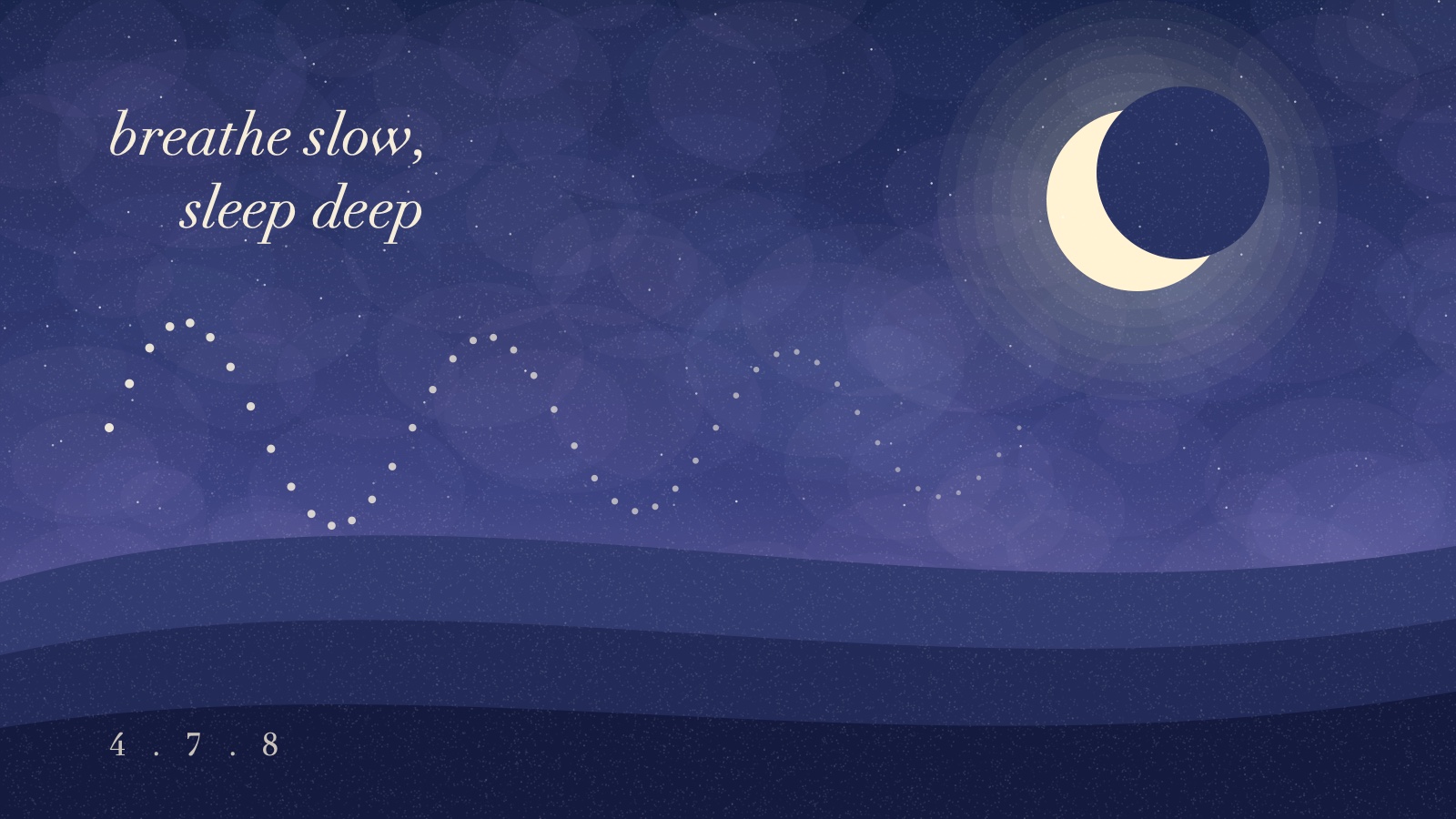
The 4-7-8 breathing technique is one of the most popular breathing exercises for sleep.
1. Get comfortable in bed. Lie on your back or side. Rest the tip of your tongue behind your top front teeth if that feels natural.
2. Exhale completely through your mouth.
3. Inhale quietly through your nose for 4 seconds.
4. Hold your breath for 7 seconds. Keep it soft, not strained.
5. Exhale slowly through your mouth for 8 seconds.
6. Repeat for 4 rounds, then let your breathing return to normal. As it gets easier, you can do a few more.
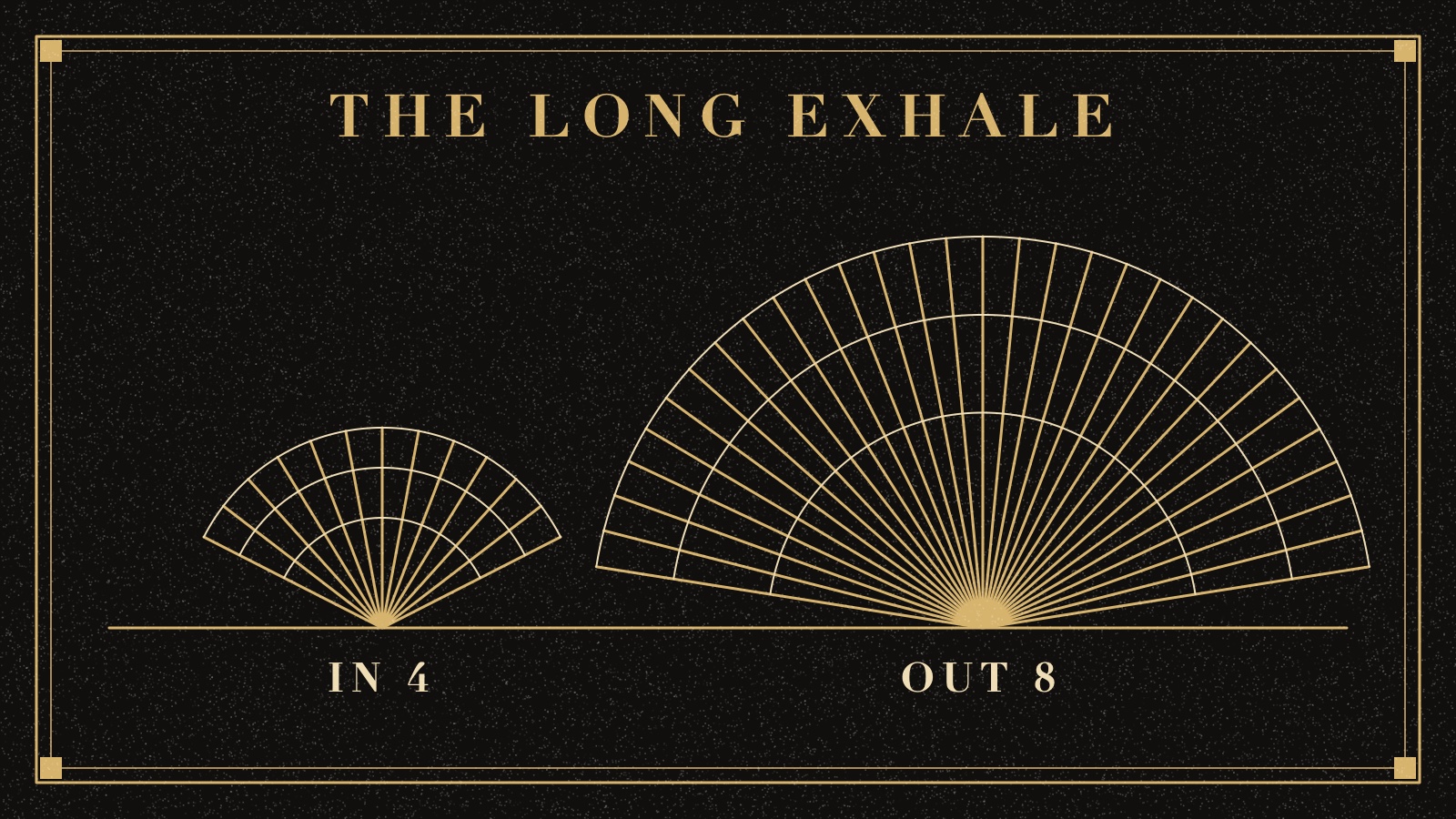
If the 7-second hold feels uncomfortable, shorten it, or skip the hold and simply breathe 4 in and 8 out. See why longer exhales calm you down.
A simple bedtime breathing routine
The studies with the clearest sleep benefits used 15 to 20 minutes of slow breathing before bed. Here is a routine that combines both approaches:
- Lights low, phone face down. Start 20 to 30 minutes before you want to sleep.
- Two physiological sighs to release tension.
- 10 to 15 minutes of slow breathing at about 6 breaths a minute, such as 4 in and 6 out, or 5 in and 5 out. This is resonance breathing.
- Finish with 4 rounds of 4-7-8 in bed.
- Let go. Stop counting and breathe naturally.
Do it every night, not just on bad nights. In the 2019 study, the benefits came after a month of daily practice.
Best breathing exercises for sleep
- Slow-paced breathing (6 breaths a minute): the most studied option for sleep.
- 4-7-8 breathing: a popular, structured wind-down with a long exhale.
- Long-exhale breathing: 4 in, 8 out, no holds.
- Triangle breathing or box breathing: structured patterns that keep a busy mind occupied.
- Nasal humming breath: a gentle, soothing exhale.
Common mistakes
Watching the clock. Checking the time raises arousal. Use sound cues and keep the screen off.
Forcing the hold. A strained 7-second hold is counterproductive. Shorten it.
Only breathing on bad nights. Like most habits, it works best when practiced daily. See how to build a daily breathing habit.
Expecting instant sleep. Breathing helps your body get ready for sleep. It doesn't flip an off switch.
The best app for sleep breathing: The Breath Interval
The worst thing for sleep is a bright screen and a voice in your ear. The Breath Interval is a top custom breathing app that guides you with soft chimes instead of narration and keeps running with your screen locked, so your phone can sit face down while you breathe in the dark. That makes it one of the best breathing apps for sleep on iPhone and iPad.
- 4-7-8 to the second. Set each phase exactly, or adjust the hold to suit you.
- A full bedtime routine. With Pro, chain physiological sighs, 15 minutes of slow breathing and 4-7-8 into one playlist.
- Screen off, sound on. Chimes mark each phase so you never need to look.
- Calming background sounds. Pick a sound to play under the chimes.
- Private by design. No account, no sign-in, no analytics. Nothing about your night leaves your phone.
The Breath Interval is free to use, with an optional one-time Pro upgrade and no subscription. Tap the rhythm below to open 4-7-8 breathing in the app.
Safety notes
Stop and breathe normally if you feel dizzy, light-headed or short of breath, and keep breath holds gentle. If you snore loudly, stop breathing during sleep, or feel exhausted despite enough time in bed, talk with a healthcare provider about sleep apnea or another sleep disorder. Ongoing insomnia deserves professional care; cognitive behavioral therapy for insomnia is a well-established treatment. If you are pregnant or have a heart or lung condition, check with a qualified healthcare provider before starting a new breathing practice.